IN SHORT
- A label and a familiar case are claims. They don’t tell you how the inside is built or wired.
- Buying secondhand? Ask who built it and who has opened it since. “Donno” is also an answer.
- Something wrong with the pack: stop using and charging it, don’t open it, ask the maker or authorised service first.
Very proper. On paper.
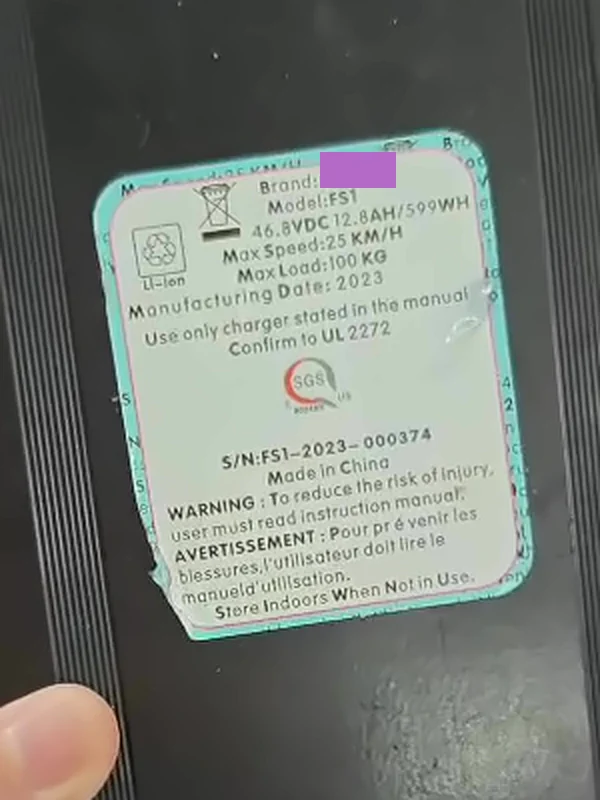
The label: 46.8V, 12.8Ah, 599Wh, “Confirm to UL 2272”. Brand name covered.
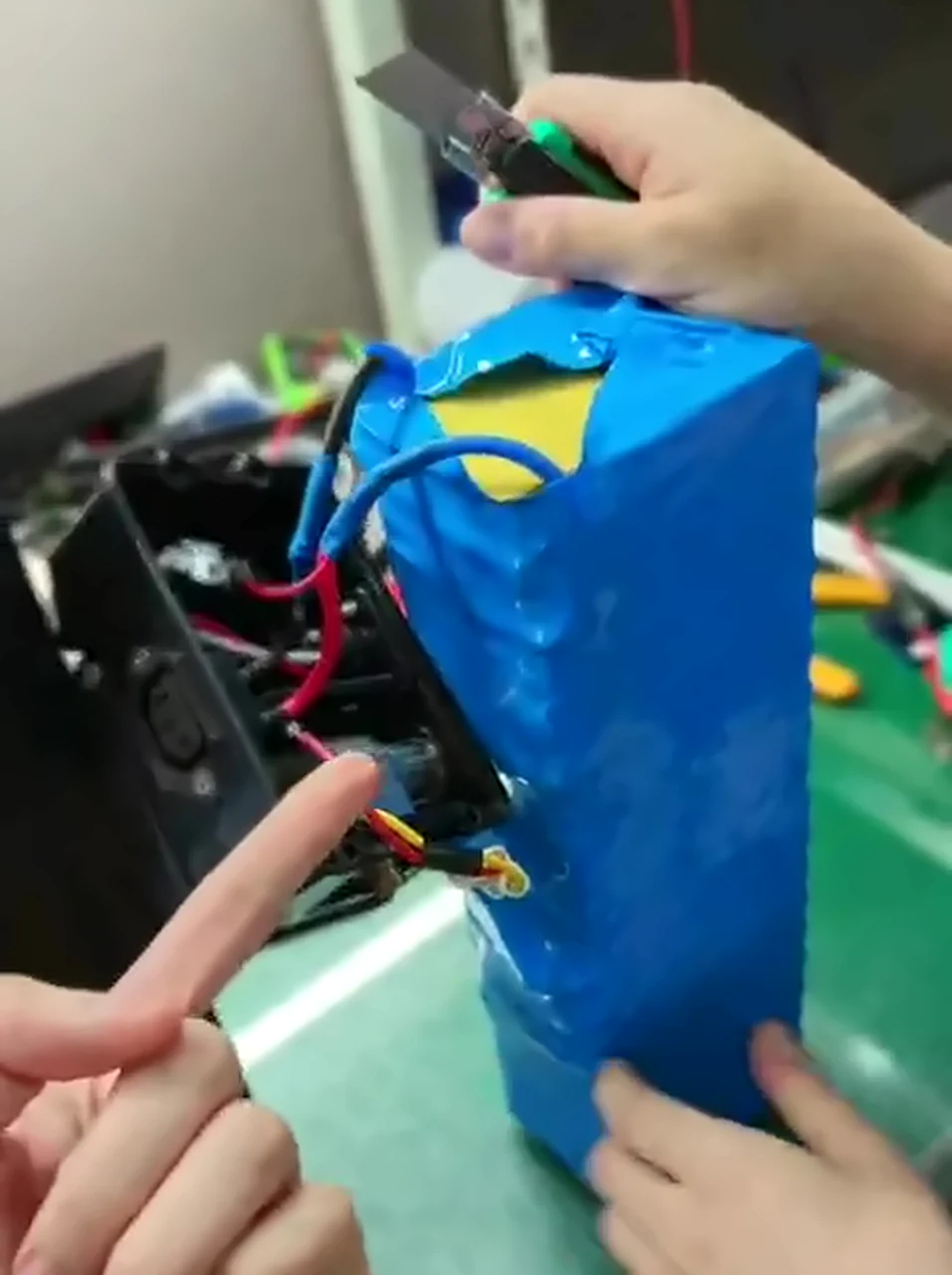
Case open: a blue PVC heat-shrink pack, the connector housing wired straight into it.
Black case. Clean sticker. 46.8V, 12.8Ah, 599Wh, and “Confirm to UL 2272” printed right there. On paper, very proper.
Who built what’s inside, the maker on that sticker or someone who opened it later? The sticker can’t tell you. Neither can we.
A guy who sells e-bikes from home bought this pack, then brought it to us to open and check. Respect. That one is the correct move. Most people only find out what’s inside when something goes wrong.
So we opened it.
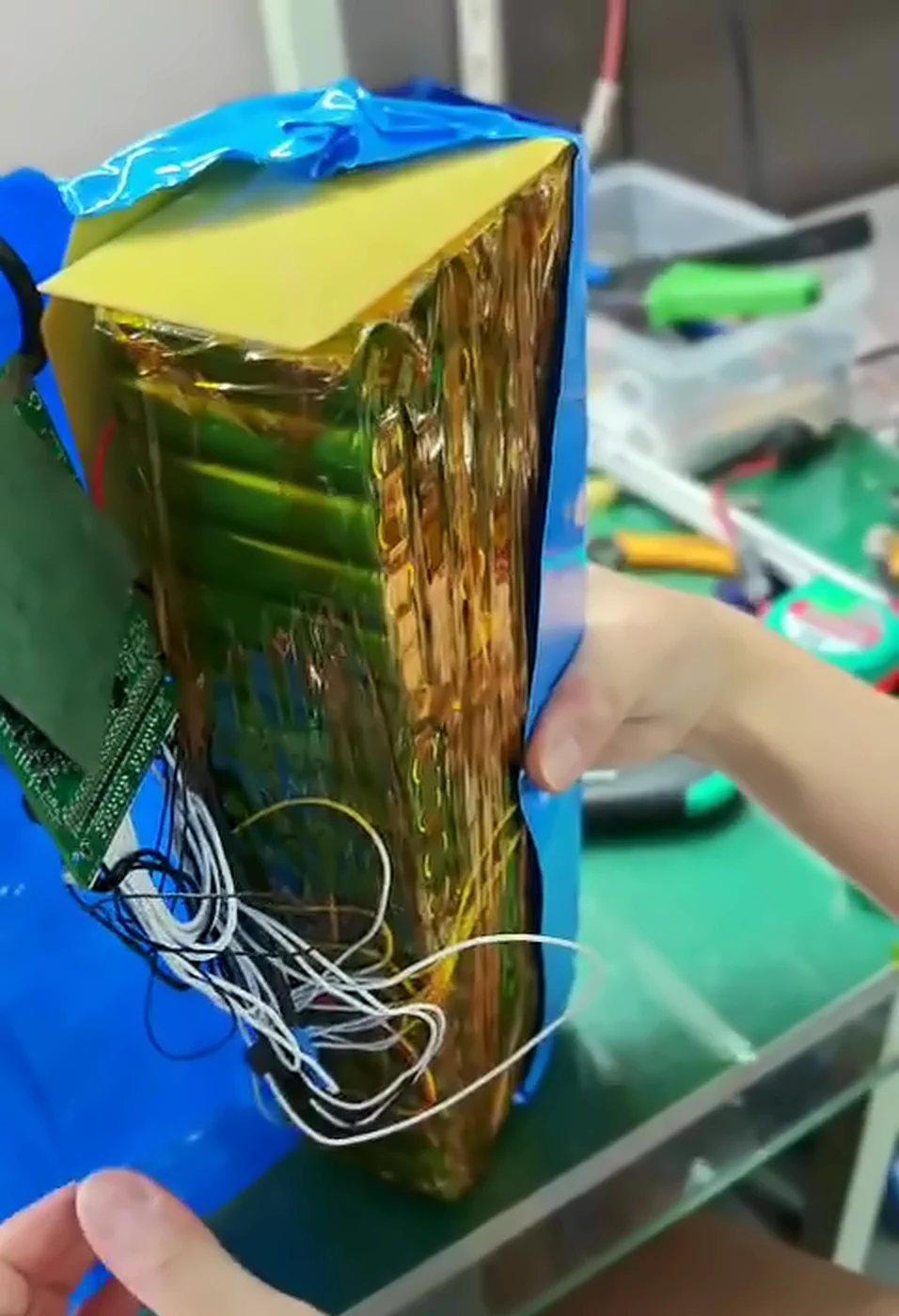
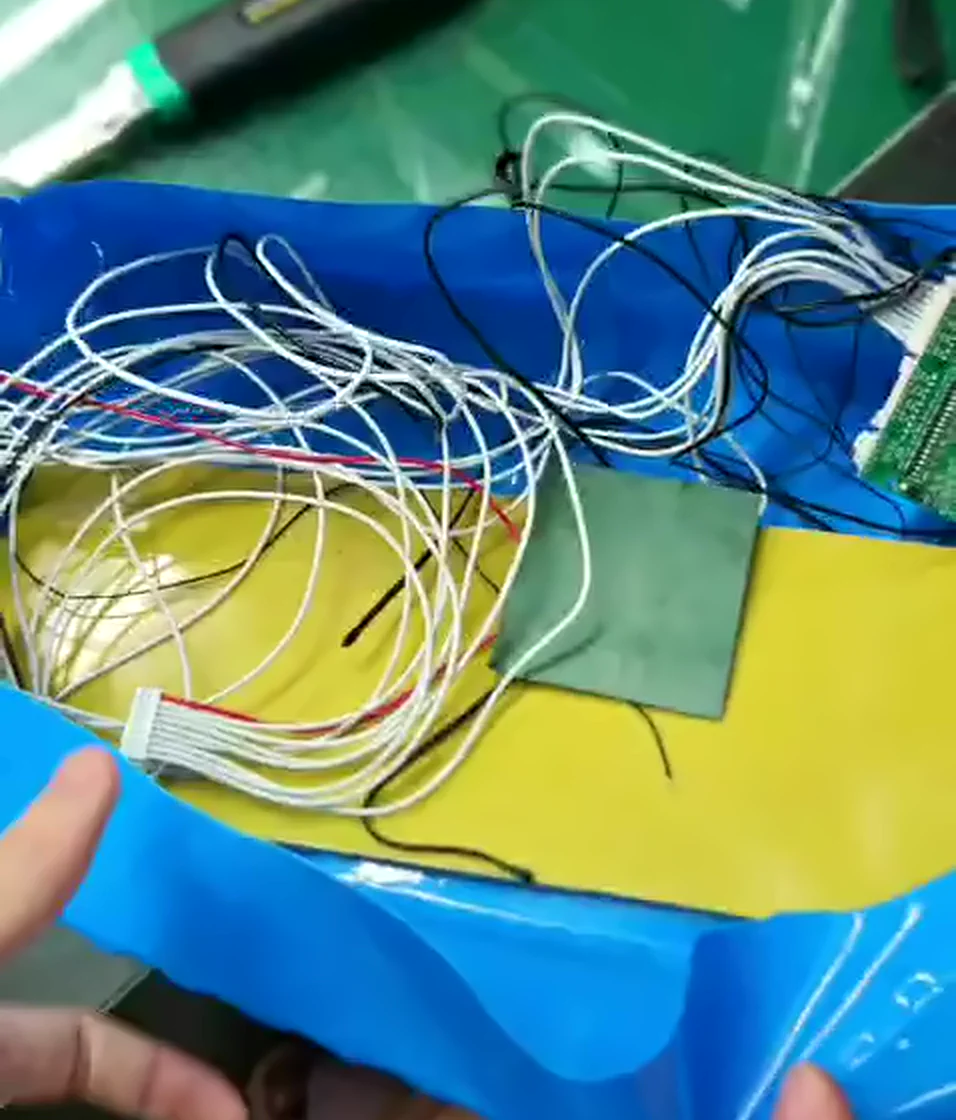
First look under the heat-shrink, and the BMS is lying flat against the cells with almost nothing in between. The back of a BMS is all components and exposed solder joints. A cell only has a thin PVC sleeve, and the metal can under that sleeve is the cell’s negative terminal. Every bump on the road, board and sleeve chafe. Chafe long enough and a solder joint meets the can.
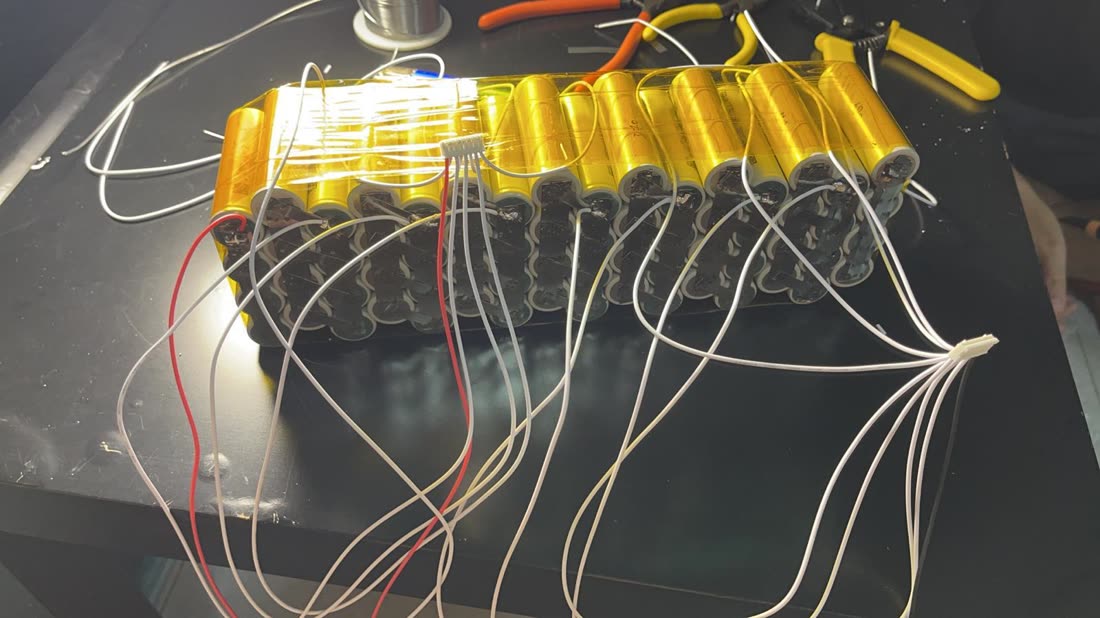
Then the balance wires, the thin leads the BMS uses to read the voltage of each parallel group. A whole bowl of them. Maggi mee. Bee hoon goreng. Whatever noodle you order, this pack got.
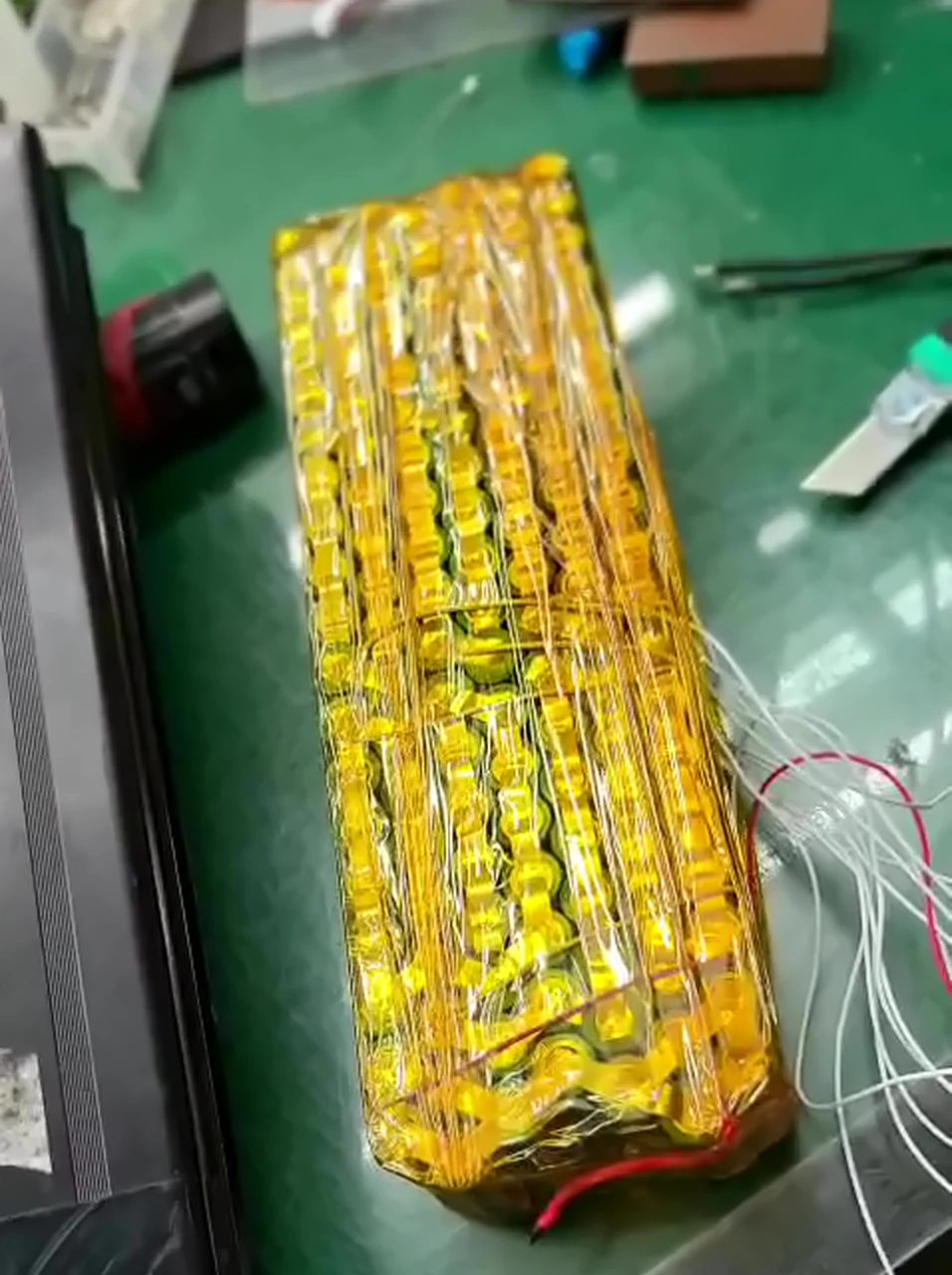
Under the noodles sits a block of green-wrapped cylindrical cells, joined with thin nickel strips and covered in Kapton tape. Someone clearly put in effort here. Lots of effort. Just not the kind that keeps a battery safe.
BMS jaga the wrong door
Got BMS, got thick power leads, got nice blue sleeve. Look like the safety guard showed up for work.
Then we followed the wires.
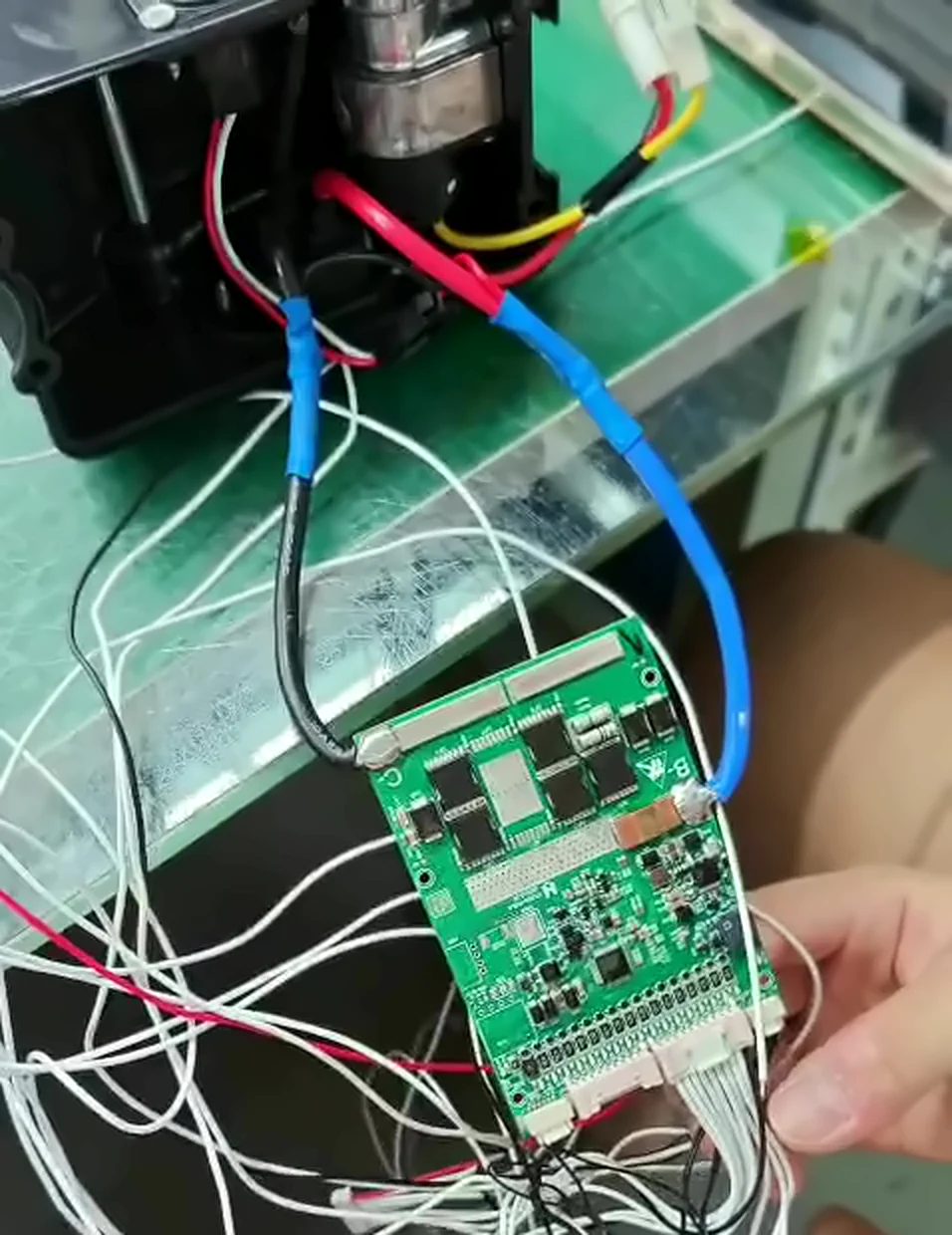
Quick one first. The BMS (battery management system) is the battery’s safety guard. It sits in the negative path between the cells and the output connector, and cuts the current on overcharge, over-discharge, overcurrent or overheating. For that to work, B− lands on the pack’s main negative and C− goes to the connector.
On this pack, both power leads go to the connector: C− to its negative, B− to its positive. Nothing from the BMS lands on the cells. The guard is standing at the door, but the battery isn’t even in the building. Jaga also must know which door to guard lah.
So the BMS can’t protect anything, and the pack has no output. Not weak. Not “range drop”. Wired like this, it doesn’t work at all. Someone fitted the most important safety part in the pack, wired it to nothing that matters, and closed it all up in a UL2272 case.
A BMS inside the case means nothing until someone has checked it’s actually in circuit.
Leads on free roam
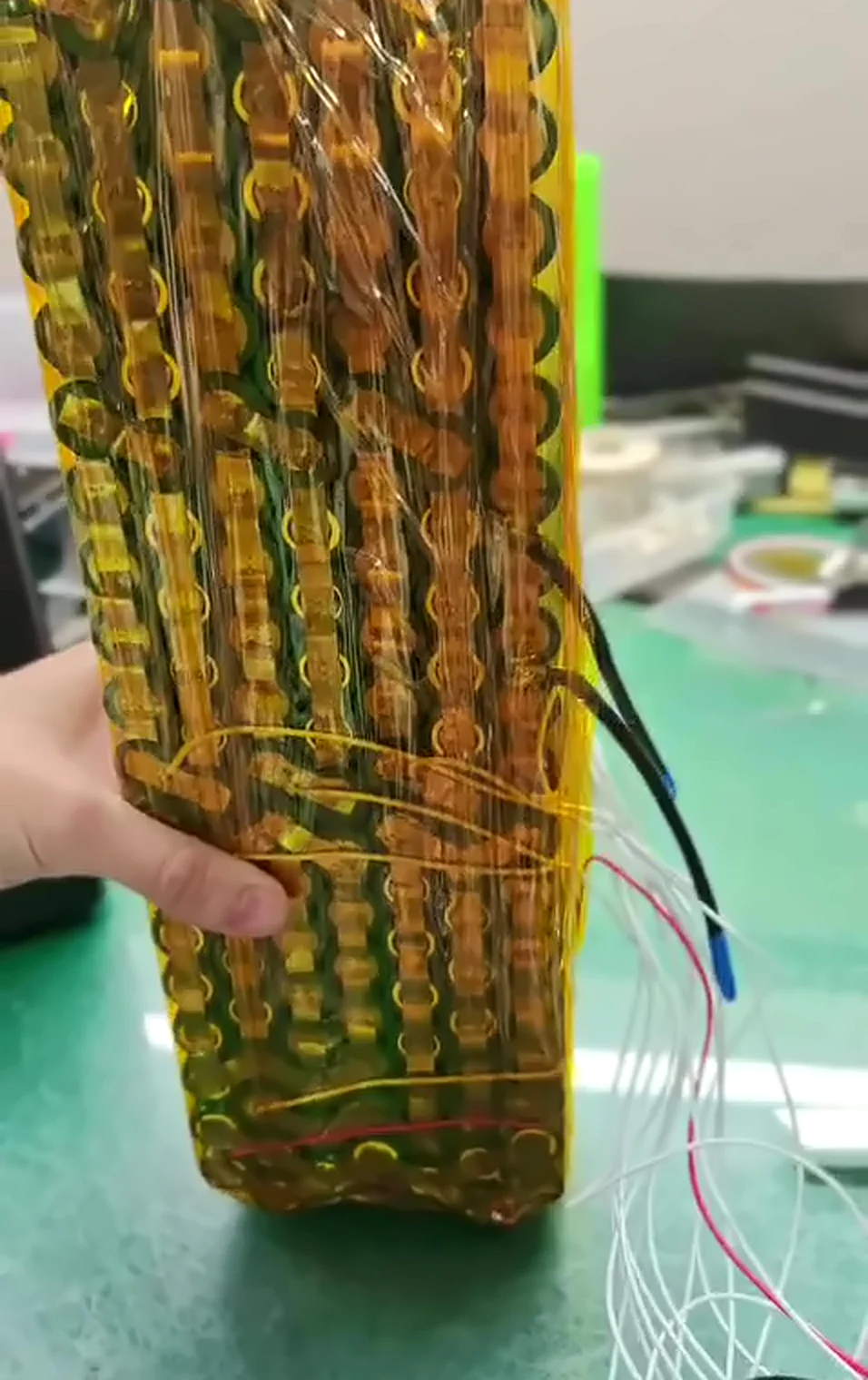
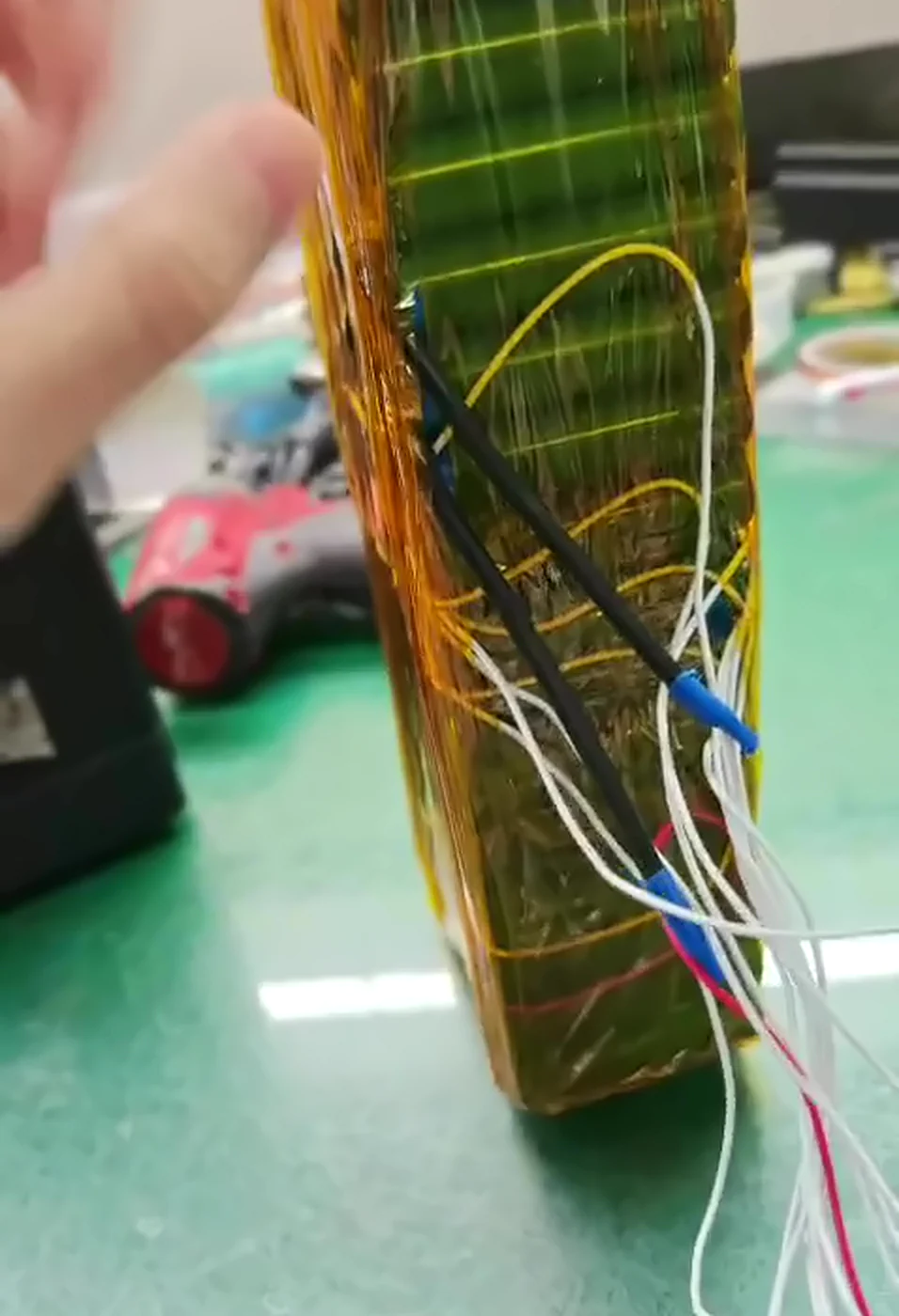
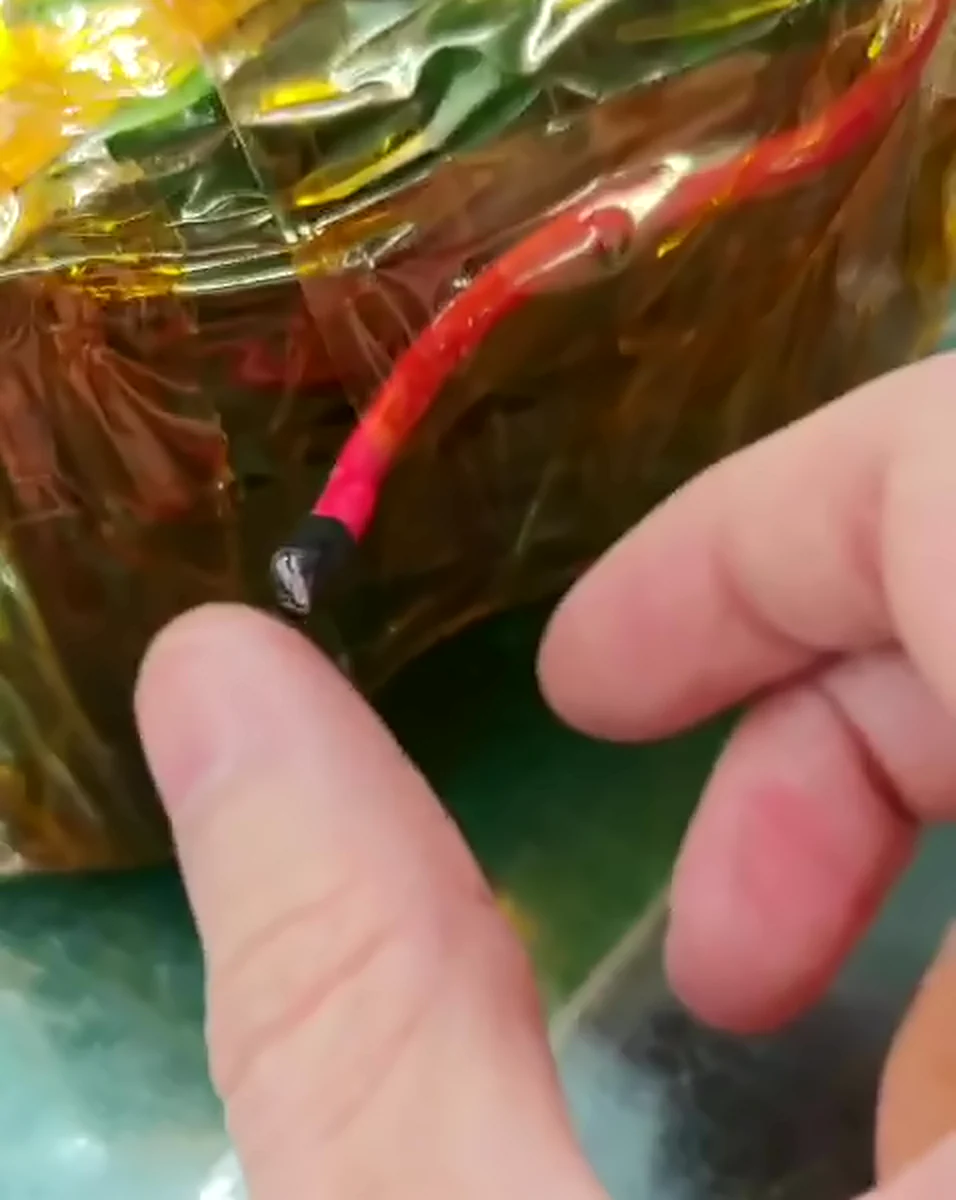
Then the leads. Nothing secured: no tie-down, no strain relief. Blue-tipped leads roaming against the cells, and at the end of the pack a red positive lead, capped off, connected to nothing, just dangling.
A loose lead in a pack is waiting to touch the wrong piece of metal. Every bump on the road gives it another try.
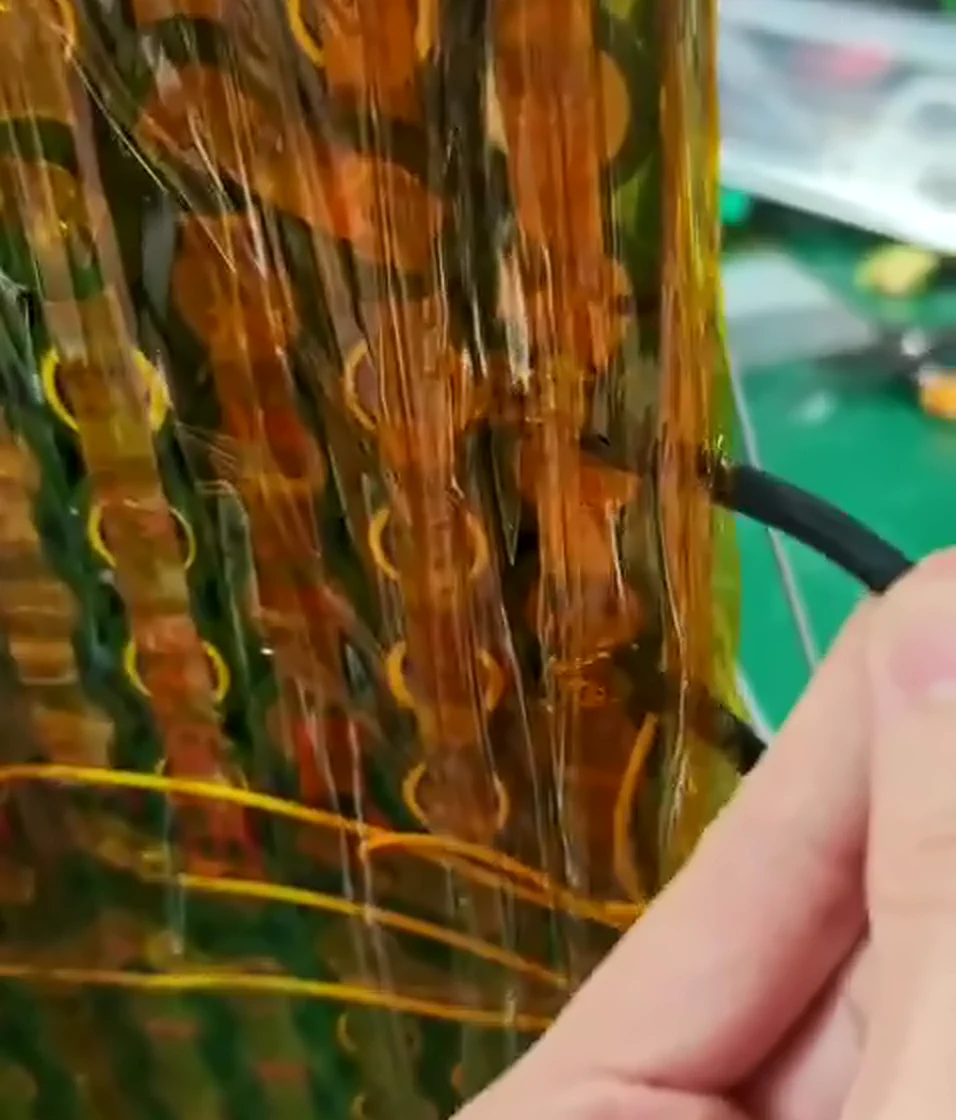
And this one. It was supposed to be soldered onto one nickel strip. Instead it missed its spot so badly that it crossed over a cell in another series group and ended up a hair away from the next strip.
If it touches, two series groups at different voltages get bridged. That’s a short circuit inside the pack: heat, smoke, and very possibly fire. Inside a closed case, on the road, with nobody watching. Missed by a hair. Lucky one.
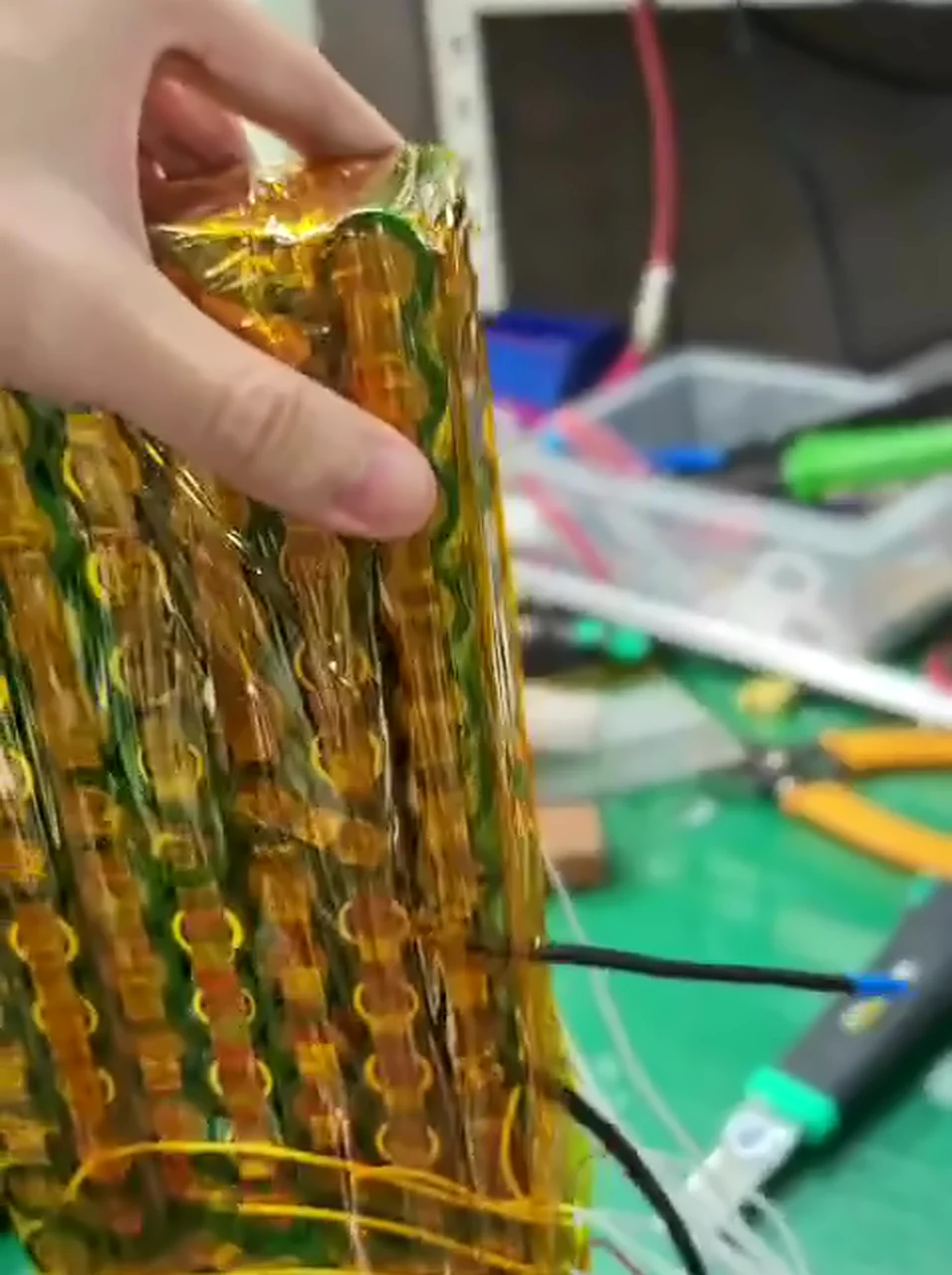
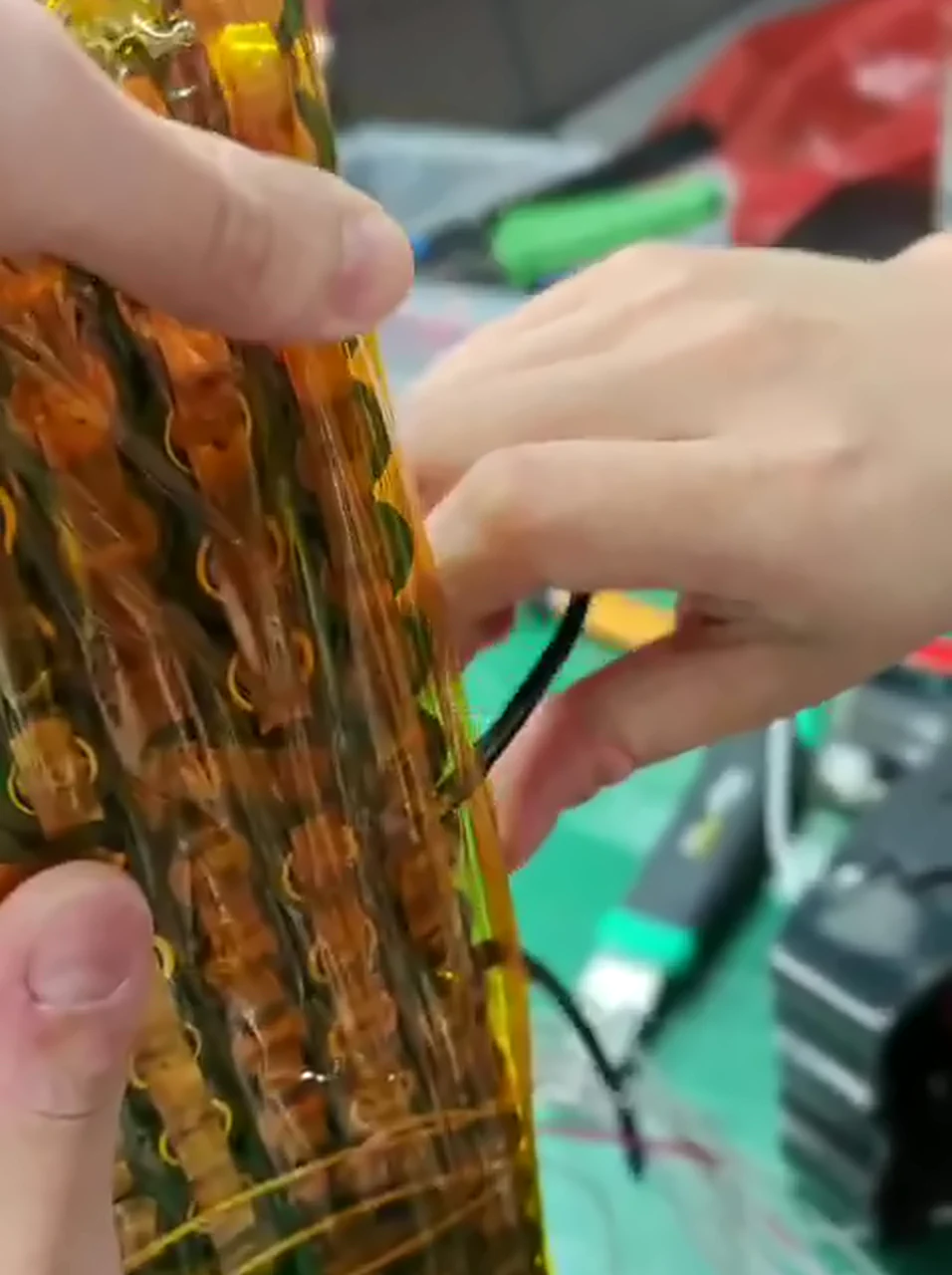
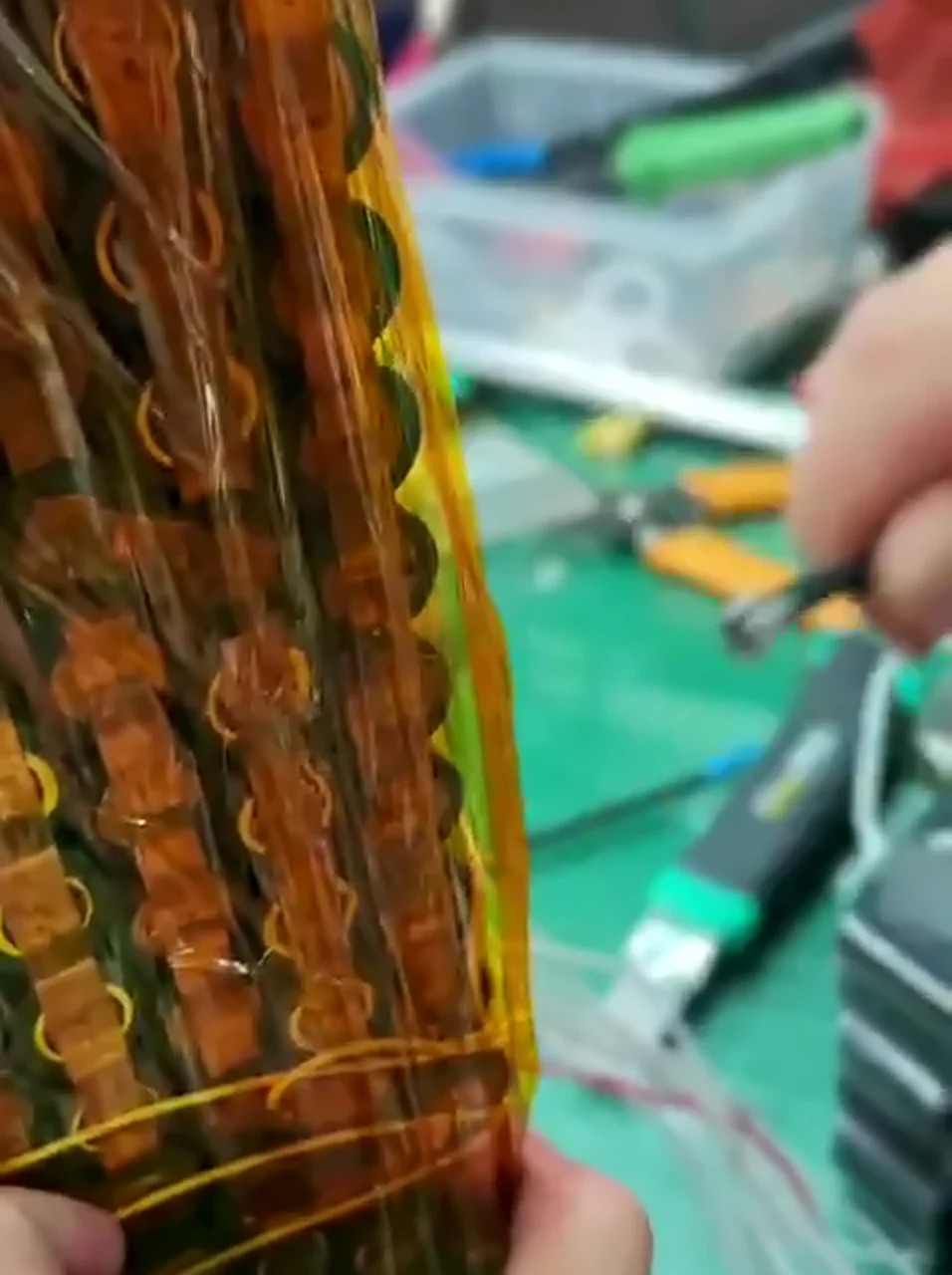
We weren’t leaving that in there. The solder joint was so poor, our technicians pulled the lead straight off on the bench. That’s a workshop job, not something to try at home.
Nickel doing overtime
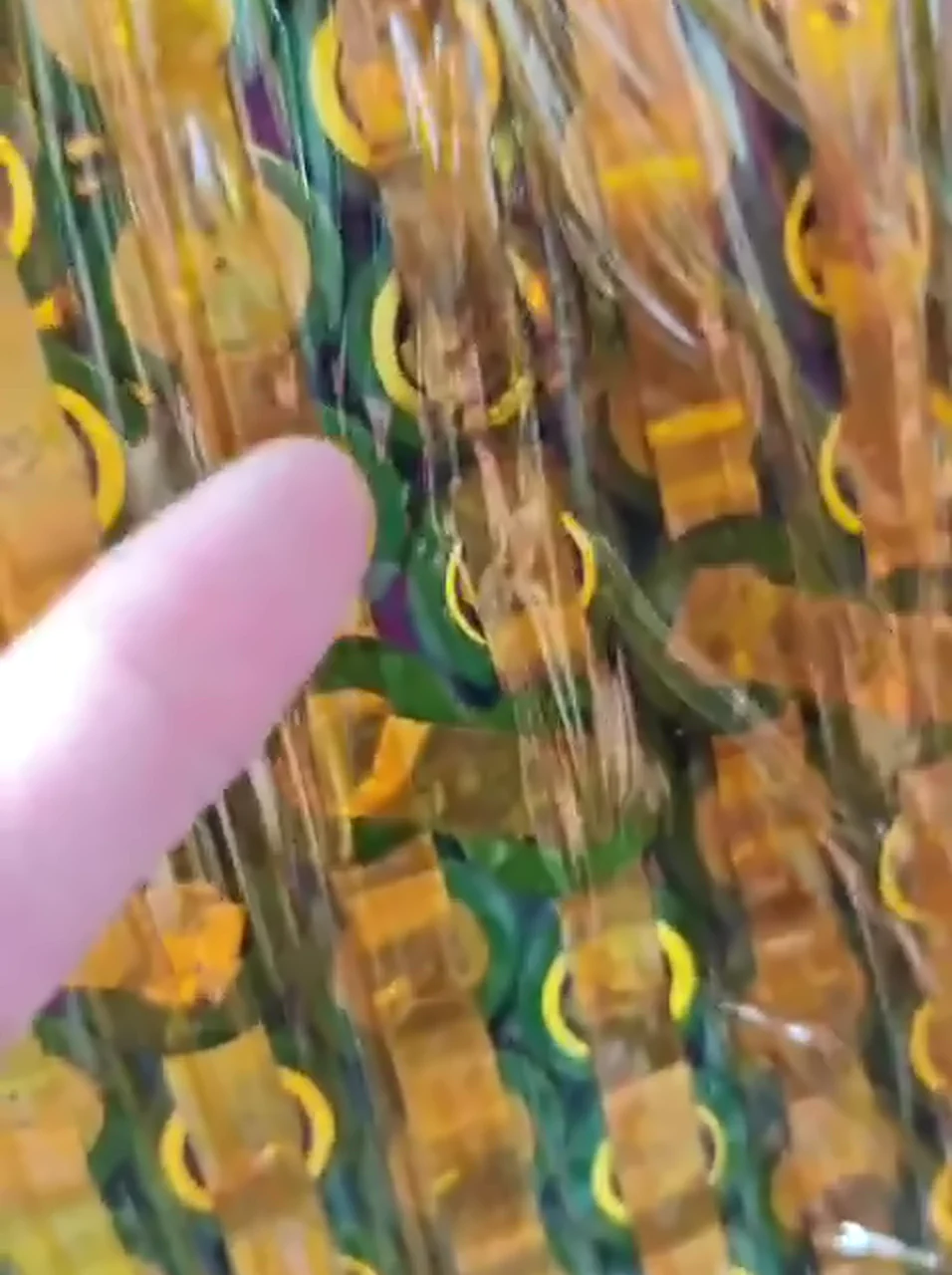
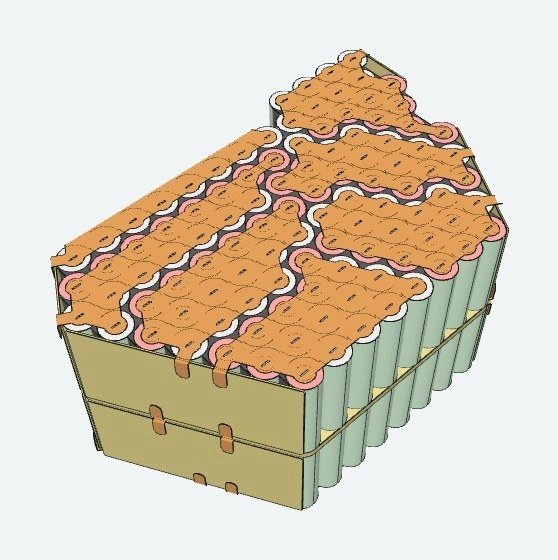
Look along the cell ends. The nickel strips joining the cells are thin, and one spot along them looked melted and discoloured to us when we had the pack in hand.
Our read: that nickel is too thin for the current a pack like this would have to carry, and nickel that’s too thin for its current heats up. We didn’t run a resistance or load test, so that’s our read from inspection, not a test result. Either way, heat discolouration next to the cells is a stop sign, not a “can still use”.
The sticker can’t see inside
UL2272 is a safety standard for the whole electrical system of an e-bike or e-scooter, battery included. A mark printed on the case tells you what someone printed. It can’t tell you whether the pack inside today is the one that was tested, or who has been in there since.
We’re not saying this sticker is fake. We’re saying the sticker can’t see inside. Doesn’t matter whose name is on it, ours included.
So when a listing says “got BMS, got UL, confirm safe one”, ask the boring questions before you pay:
- Who built this pack, and has anyone opened or repaired it since?
- Which charger does the maker specify?
- Has it been dropped, soaked or stored flat for a long time?
- Clear photos of the whole case, every label, the output connector and the charge port.
If the answer to the first question is “donno”, treat the label as a claim and the pack as unknown. Walking away is also a complete answer.
We’ve been there. Three times.
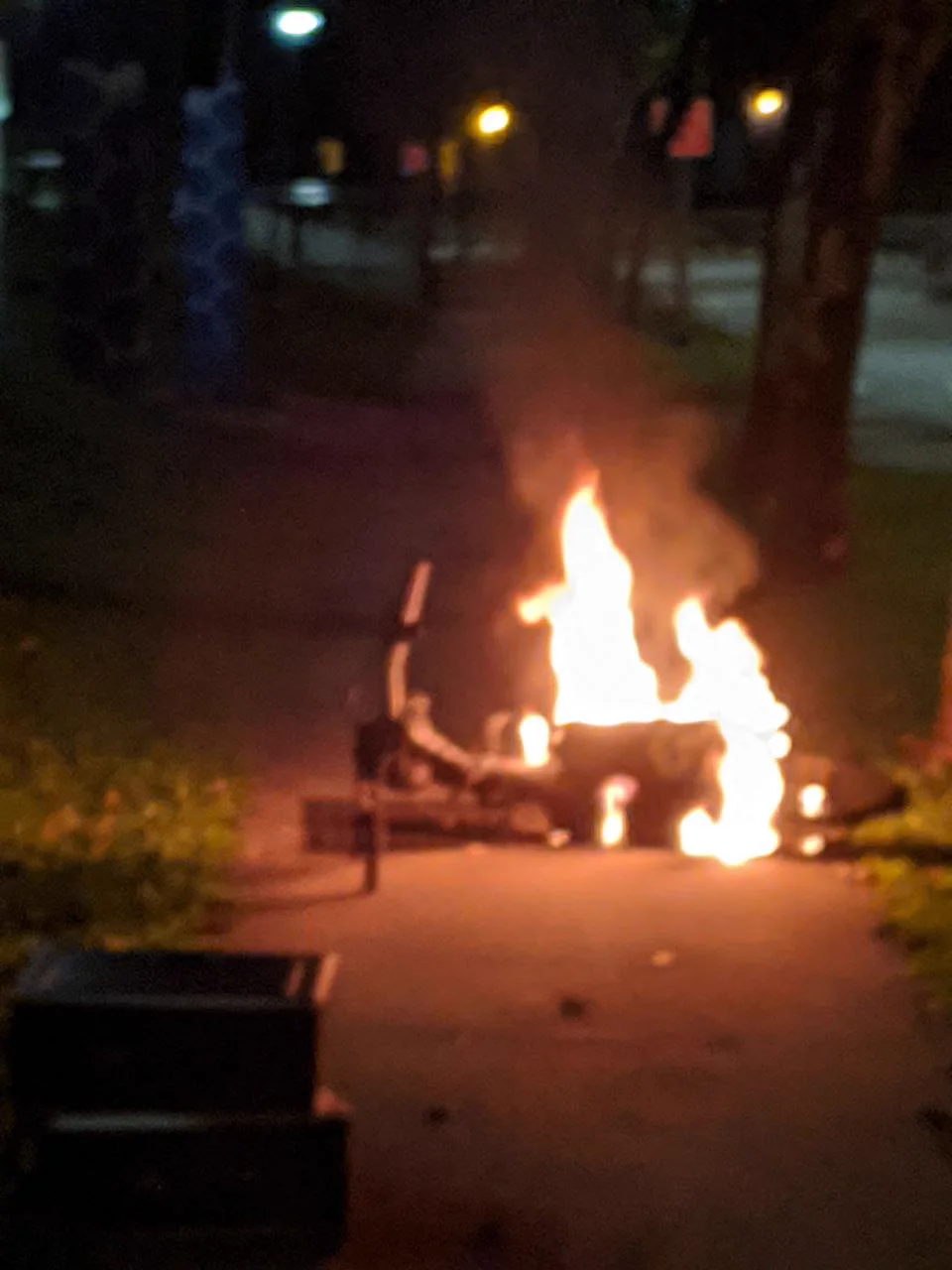
This isn’t theory for us. We’ve had to deal with three battery fires before they got out of hand, and one of them was our own fault. The full stories, mistakes included, are in Battery fire? You got about one minute. The short version: a fire extinguisher only buys time, water is what actually cools a lithium battery, and once a smoking pack is out in the open, you stay away from it.
Got a pack like this? Do this
Okay, serious part, no jokes.
Not sure what’s inside your pack? If it shows none of the warning signs below, bring it in and we’ll check it for you. If it shows any of them, don’t carry it in: send us clear photos first.
Dangerous to use, but calm on its own (swollen, cracked, leaking or wires showing, but not getting hotter, not hissing, not smoking): stop using it and stop charging it. Don’t press it, open it or poke it to check. Don’t touch or sniff it to check. No salt water needed. If you can do it without pressing on it, tape any exposed wires and seal it in a leak-proof container or bag, away from anything that can burn. Don’t ride with it, courier it or carry it into a shop: send us clear photos first, or ask the maker or authorised service.
Hissing, smoking, or getting hotter on its own: you may have about a minute. If it’s safe to do so, get it out of the flat fast: drag it in a fire blanket or push it with a broom handle, never carried against your body. Put it in the open, away from your door, the stairs and anything that can burn. Then keep everyone away from it and call 995. Better it burns out in the open than inside your home. Once it’s out, stay away from it: it can go minutes later.
Already on fire: raise the alarm and call 995. If you can do it without putting yourself or anyone else in danger, an extinguisher in short bursts keeps the flames down while people get out or water arrives. It won’t put the battery out. If you can’t do it safely, don’t try: get out, close the door behind you if you can, stay out. Don’t stop to film it.
Getting rid of it: not the general rubbish and not the blue recycling bin. Before anything moves, tell ALBA, or whoever is collecting it, that the pack is damaged, ask whether and how they can take it, and follow their instructions.
What we do on our side: when a pack is too unstable to hand to a collector, our technicians neutralise it in salt water before it leaves the workshop, like other battery makers do. Better a dead, corroded pack than a fire in a collection truck. That’s workshop work, not a home job.
We can’t promise any pack is safe from photos alone, and we won’t. But send us clear photos of what you’ve got and we’ll tell you straight what we see.
Sources (6)
- Singapore Consumer Product Safety Office: lithium-ion battery safety
- NFEC: Fire safety for Active Mobility Devices
- UL 2272 standard scope
- MSE: disposing of damaged mobility-device batteries
- Fire Protection Association (UK): how to control a lithium-ion battery fire
- FDNY: devices powered by lithium-ion batteries (“If safe to do so, move the device away from anything that can catch fire and call 9-1-1.”)
Not sure about your pack?
Send us clear photos first. Don’t bring a damaged pack in.