IN SHORT
- One component label does not rate the complete battery.
- The physical current path still runs through links, joints, wires and connectors.
- Ask for the complete setup and existing build records; don't open the pack for a photo.
A CHAT WE SEE A LOT
R
Rider
bro this BMS number damn big 😅
which part ah? 👀
the whole battery lah. see the BMS 😬
eh u changed subject halfway through your own sentence sia
first u said battery, then u showed one board
that board matters, but current still has to cross everything connected to it
show the complete setup, not only the biggest number
Current still has to go somewhere
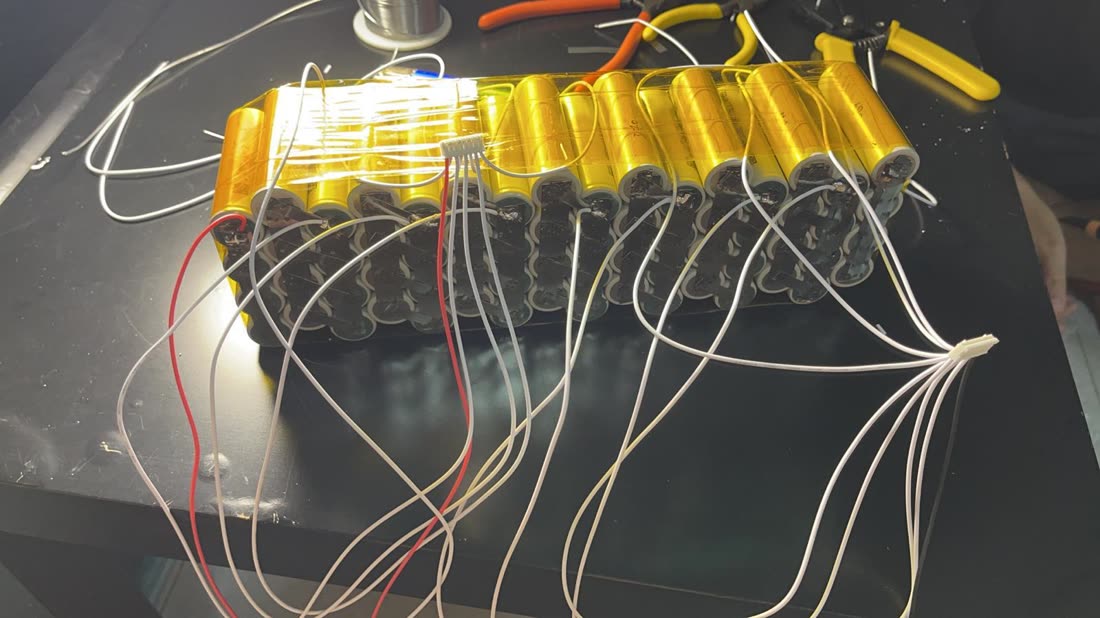
In one workshop clip, the narrator points to a thin metal link and explains that the whole parallel group’s current has to pass through it. He says the link becomes hot beside the cell insulation. That is an on-camera explanation, not a measured rating, so this article keeps the principle and leaves the numbers out.
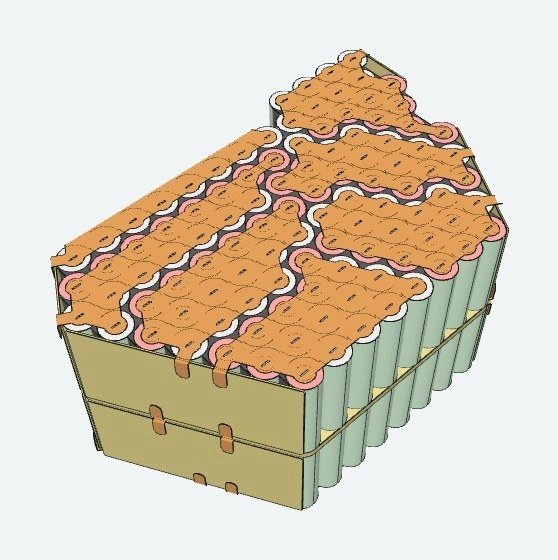
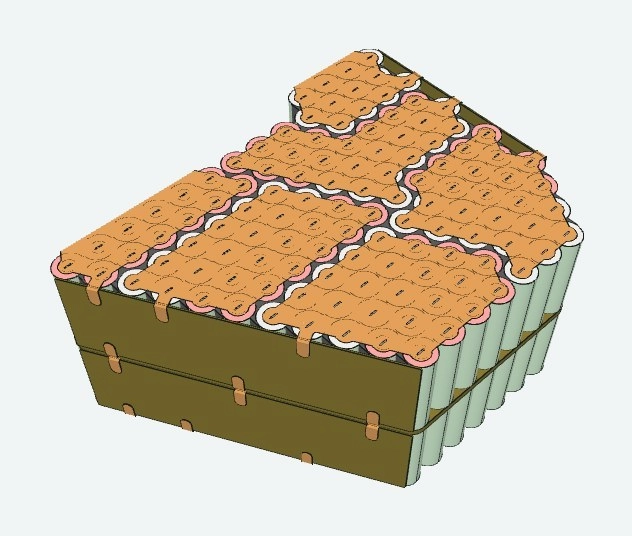
The useful question is not “which part has the biggest number?” It is “where does the current physically travel?” The photographs show cells joined by metal links. The narration identifies one thin link as the bottleneck in that path. A board label cannot make that metal wider, improve a weak joint or change the connector at the end.
This is also why a current calculation is not automatically a pack rating. Cell information, a printed board claim and arithmetic each describe only part of the system. A finished claim needs evidence for the path that actually exists in the finished pack.
One big part cannot carry the whole claim
Cells, metal links, joints, wires and connectors remain part of the current path. A large number printed on one board does not tell us what every other part can carry, how long it can carry it, or what the completed pack has actually demonstrated.
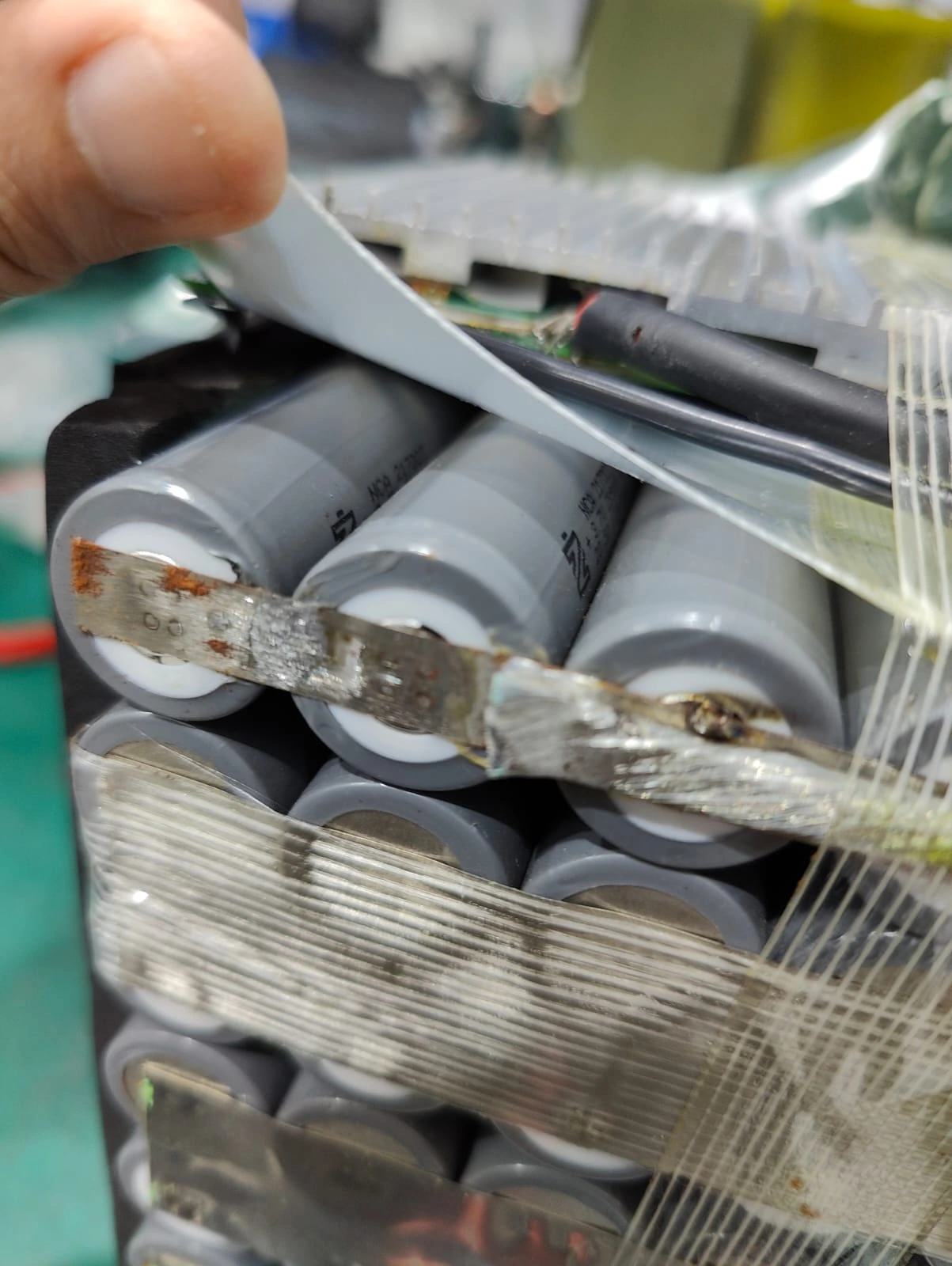
The same evidence discipline applies to photographs. Media 4033 clearly shows cell ends, narrow links and rust along part of a strip. It does not identify the alloy, measure resistance or establish why the corrosion appeared. Those unknowns stay unknown. The image belongs here because it makes the physical path visible, not because it supplies a rating.
One big number cannot carry the whole pack.
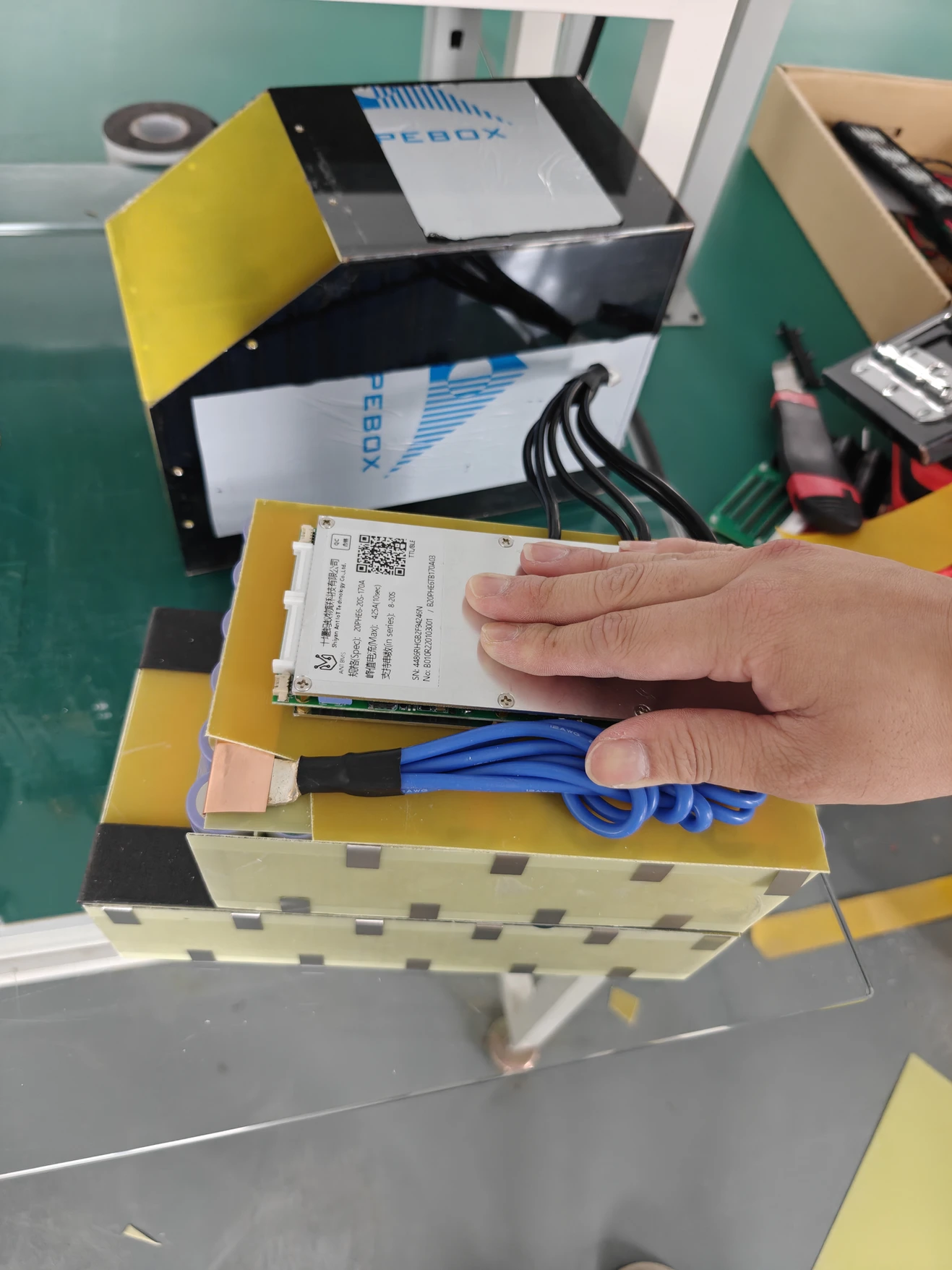
The point is not “our BMS bigger.” The point is that the board, wiring, insulation and conductor path have to be considered together. The photograph records construction; it does not certify performance.
Show the complete setup
Send the existing battery specification, controller label and charger label. Include a build record if one exists. Don’t remove the casing for a photograph. A useful review compares the records that already exist instead of creating a new risk just to get a better picture.
Ask what the printed number refers to, where it came from, and whether it describes a board listing, a cell datasheet or a documented complete-pack test. If those records are missing, “not enough information yet” is the professional answer. It is better than assigning the strongest number in the screenshot to the entire battery.
Evidence notes (2)
- DogeTune workshop narration: WA0005 and WA0053, recorded as spoken claims rather than measurements.
- Media 4033 and 4006: visible construction only; neither establishes a complete-pack rating.
Need the electrical terms first?