IN SHORT
- Don’t charge a battery unattended. If a pack looks damaged, stop using it and ask the maker or authorised service.
- Swelling, heat, smell or hissing: stop using and charging it, and don’t open it.
- Don’t ride with, courier or carry a damaged pack to a shop. Send photos first.
The incoming packs and the DogeTune comparisons are labelled separately. Seller names are covered; the workmanship stays in view.
Workmanship like this, can ah?
The workmanship looks like the laser resigned lah.
Riders brought these packs to us and our partners. These photographs and recordings show the construction details we want to discuss.
This isn’t one bad weld having one bad day. We saw the same mistakes across packs, including some that can start fires. So we’re laying it all out here, one photo at a time: what’s wrong, why it matters, and what it should look like instead.
Samsung on the label, then what?
That label is wearing “Samsung 50G” like a crown, while the workmanship quietly asks who approved the costume. The pack itself says Samsung 50G, 72V 38.4Ah, 20S8P, with cells listed as Samsung INR21700-50G.
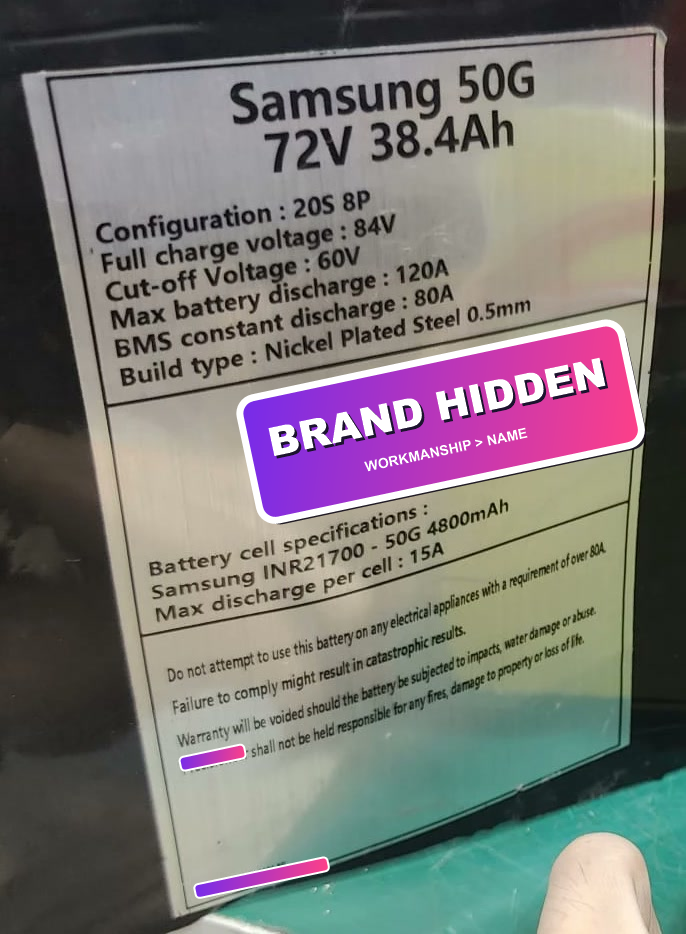
Samsung on the label, the seller’s own name on the cells: wah, the plot changed lanes without signalling. In the original cell photo, the wrappers are printed INR21700-50G, a capacity figure and the seller’s name, which we’ve covered here. No Samsung marking is visible in that photo. Samsung where? Samsung in spirit only.
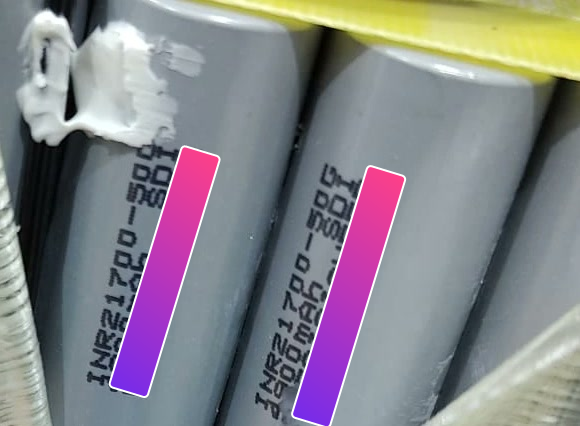
A seller’s name on a wrapper doesn’t establish who made the cell underneath. The photographs alone cannot tell us whether these are original cells, rewrapped cells or something else. In our view, that is not enough traceability for the Samsung claim on the label.
Fifteen amps per cell, says the label. The spec sheet did not attend this promotion ceremony, sia. The 50G revision matters: Samsung SDI’s 2023 Ver. B sheet lists 14.7A continuous at -20 to 30°C, and 9.8A at 31 to 60°C. The 2018 tentative sheet instead lists 9.8A continuous and 14.7A non-continuous. The actual cell revision and origin here are unconfirmed, so a bare 15A label does not settle the pack’s capability.
Wah, that disclaimer arrived dressed as a fire blanket made of paperwork. Right at the bottom, the label carries their own words:
“[Brand hidden] shall not be held responsible for any fires, damage to property or loss of life.”
Read that again. That’s printed on the battery.
Weld held on by vibes, and not many
That weld gives way to one finger like it heard the word “commitment” and immediately filed for separation, bro. The source recording shows one finger lifting the nickel strip off the cell, without tools. In this still, the strip is already lifted, exposing the cell end underneath.
This weld looks like it clocked out early. A proper spot weld fuses the strip to the cell. You need tools and real force to tear it off, and it usually takes a bit of the cell can with it. A strip that lifts with a finger was barely holding on. On the road, vibration does the same job your finger did. When a strip lets go, that cell drops out of its parallel group and the cells left in the group take its load. And a loose strip flapping inside a pack can touch something it shouldn’t.
The narrator’s description in the source recording: “See why, there’s just a tape sticking onto it.”

Our side of the bench
Every strip goes down under the spot welder, with the pack held in a jig.
Wah lau, insulation kena barbecue
Wah lau, one thin strip and the insulation next to it kena cooked. This workmanship got the thermal manners of a siao kettle. Look along the top edge of these cells: the thin strip has left dark brown scorch marks on the insulation right beside it.
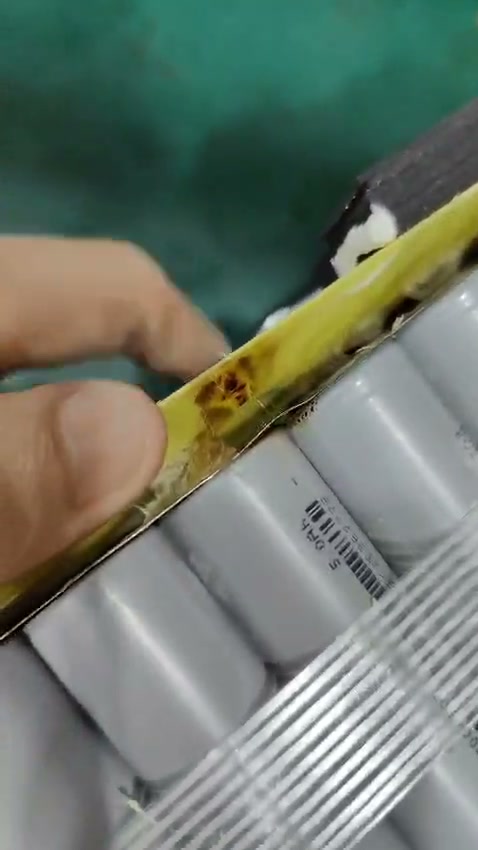
As we explained during this inspection: “You see how the plastic is starting to melt… because this piece of metal here is so damn hot. It’s only one thin piece of metal.” We also said: “The battery cell got six of them in parallel. Theoretically this battery can do 60A, but this thin piece of metal cannot even do 20A.” Those current figures were our spoken assessment, not a measured load-test result.
That’s the whole problem in one line. Six cells can share a lot of current, but all of it has to squeeze through one thin strip, and a strip that’s too thin turns current into heat. If that grey insulation melts through, the cell’s positive end can touch its negative. That cell goes first, then its neighbours, then the pack.

Our side of the bench
Busbars are cut to suit the current the pack has to carry, so no single strip ends up as the bottleneck.
Cell caps kena solder iron
Siao, that solder is less a joint and more a small sculpture titled “the iron was here”. Look at the cell ends: the balance wires meet shiny solder deposits on overlapping metal strips. The photo shows those attachment points; it does not establish that they are soldered directly to bare cell caps.
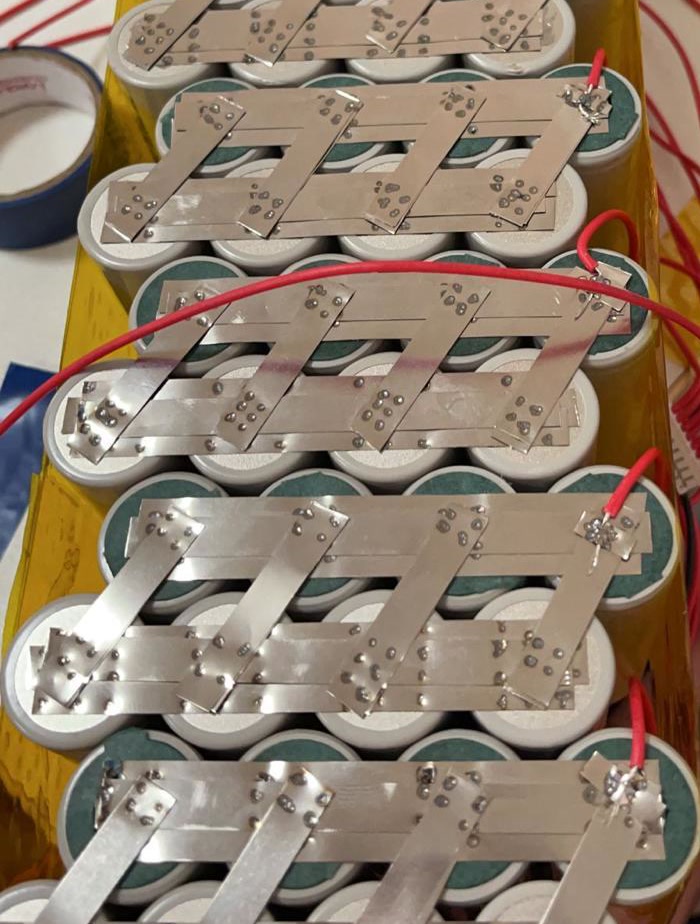
A narrator counted it out in another source recording: “On the positive, so much solder. On the negative also, so much solder. Wah, can use so much solder ah?”
Direct solder on a cell is playing chicken with the cell. Samsung SDI’s handling instructions prohibit soldering directly on the battery and warn about heat damage. That is different from soldering a wire to an already welded tab. Keep that distinction clear when looking at these joints.
Our side of the bench
Balance leads run to every group and get attached to the busbars, not cooked onto the cells.
Cells got free-range package
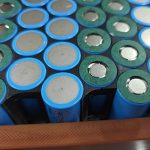
Bro, the cells wobble around like the layout is still taking suggestions. Tape and confidence, sia. On this pack, the visible wrapping is film and reinforced tape; hidden supports cannot be assessed from the still alone.
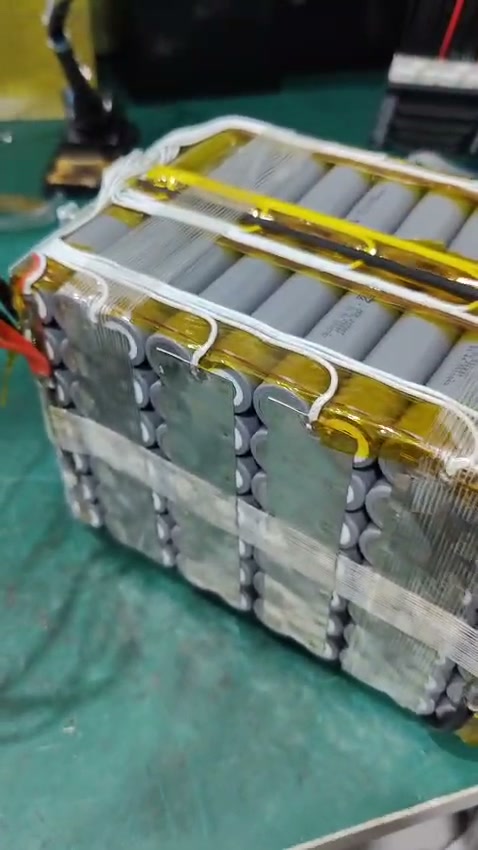
On camera: “You poke the battery, all can move… he never taped the battery cells together.” And on another pack: “See, look at the cell, loose one.”
The same clip goes on: “Never put the paper ring… this one poke inside, short circuit.” A cell’s positive end sits right next to its negative rim. Insulation rings stop a strip or a burr from bridging the two. Leave them out, let the cells move around, and every pothole tries to connect plus to minus.
Our side of the bench
Insulation rings around the positive terminals, with the cells in a holder, not a tape roll.
Tape promoted to case, salary still pending
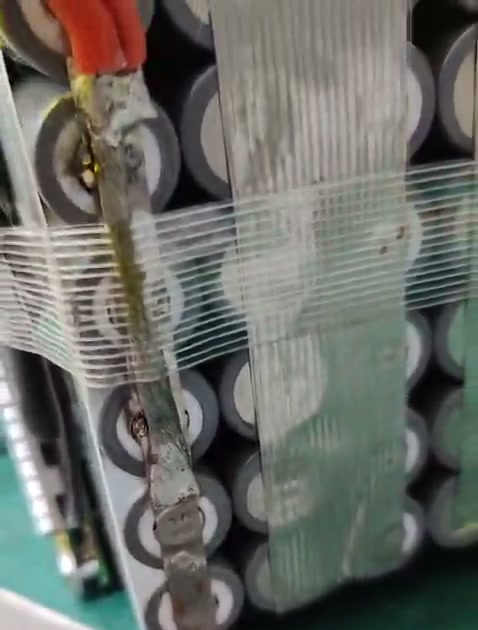
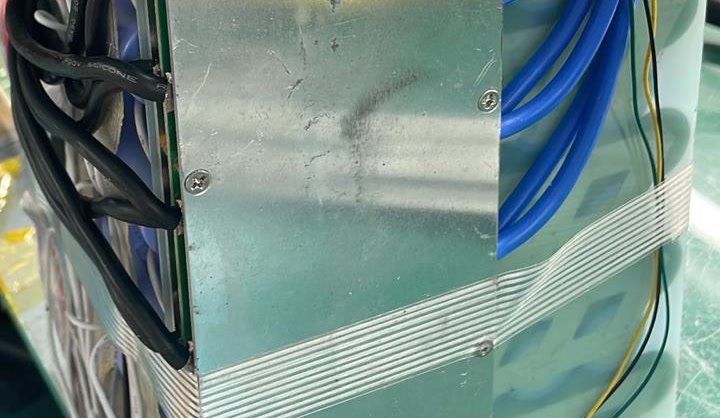
The enclosure plan was apparently one long conversation with tape, and the tape had no follow-up questions. This is the whole “enclosure” on one of their packs: a thin layer of film and clear tape, scuffed, stained and peeling at the corners. The photograph shows a hand against the wrapped side. The power leads come straight out through the wrap at a corner, with no grommet and no strain relief.
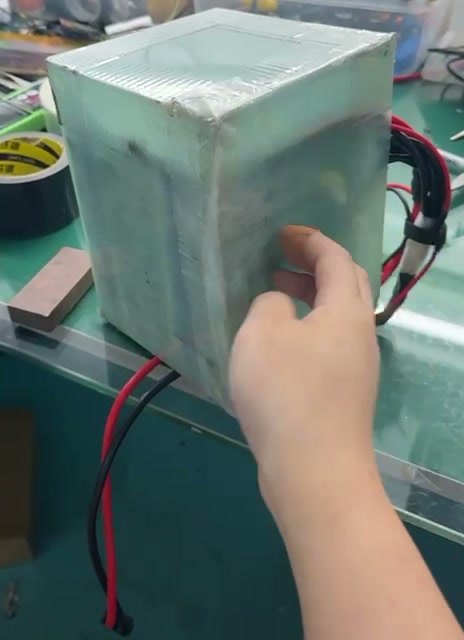
Tape has been promoted to bodyguard, but it can’t stop a knock, a sharp edge or water. Every drop and every pothole goes straight into the cells. A cable with no strain relief gets worked back and forth at its exit until the insulation wears through.
Our side of the bench
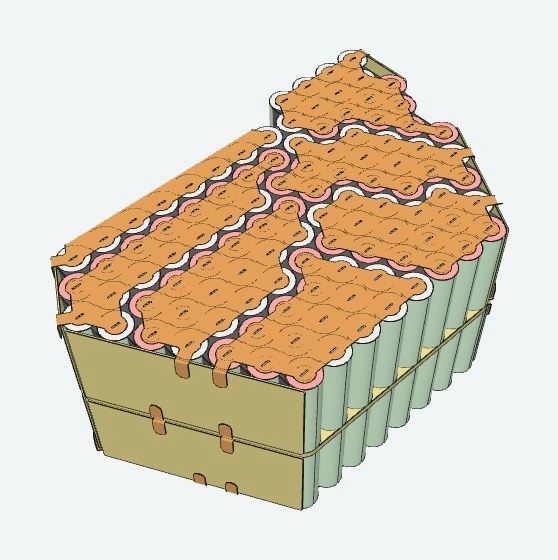
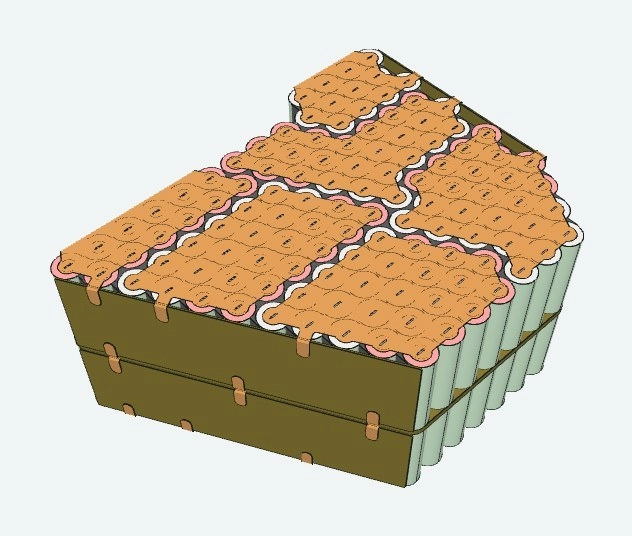
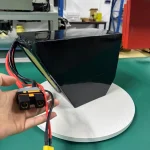
The pack gets an FR-4 wrap first, then a sheet-metal case, and the leads come out through proper fittings.
BMS went for a walk and nobody stopped it
That BMS is hanging on by tape and pure suspense, bro. The workmanship has turned installation into a cliffhanger. The BMS is the board that protects the pack, cutting it off before it overcharges, over-discharges or overheats. On this pack it’s taped to the side, with thick leads soldered onto the cell ends beside it. On another, it hangs off the pack on its wires.
This mounting has the stability of a shopping bag in the wind. A protection board that can swing around works its own solder joints loose. It can also rub through the wires next to it. And if it lets go, there’s nothing left watching your cells.
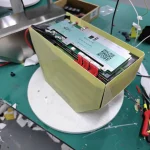
Our side of the bench
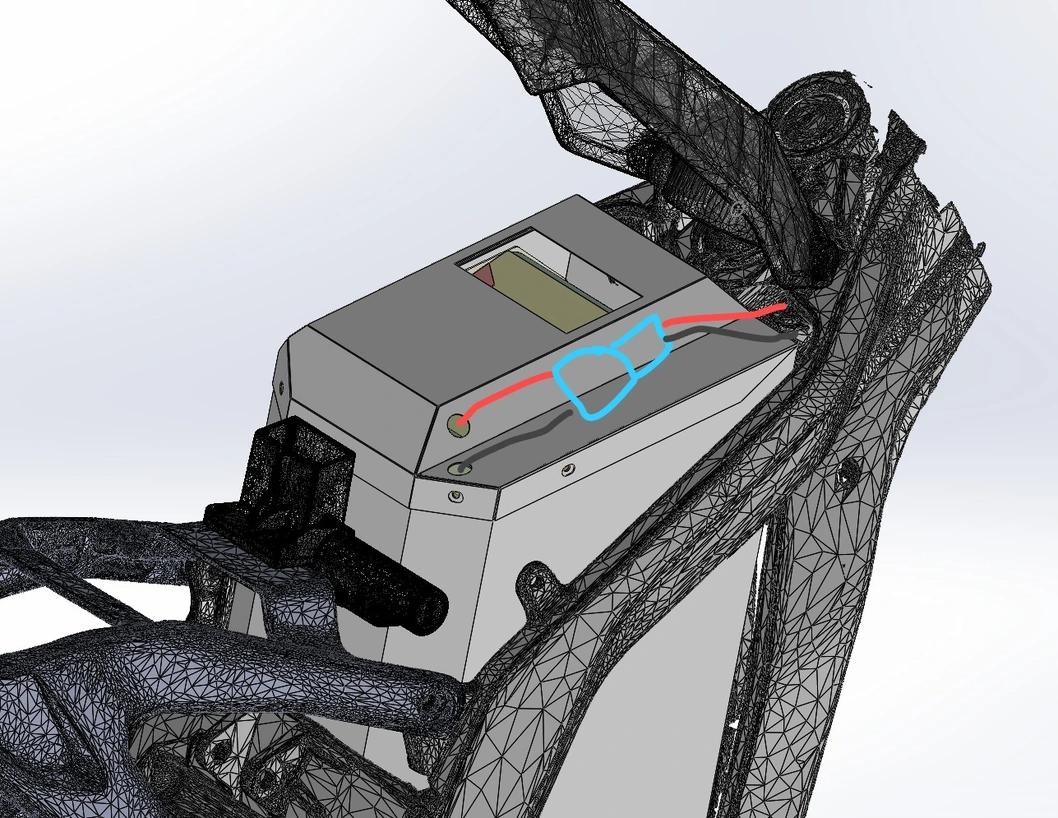
The BMS is mounted onto the wrapped pack and its wiring routed before the case goes on.
Maximum effort, zero brain
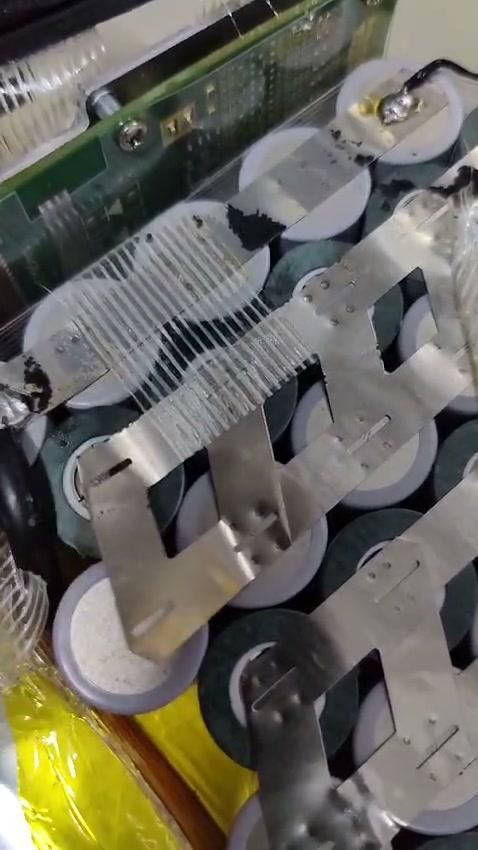
Wah lau, this current path takes so many turns it needs its own kopi break, and one thin link is holding both halves together. Confirm the design meeting never ended. On this big pack, the red balance wires snake under the filament tape in long loops, and the BMS sits on top.
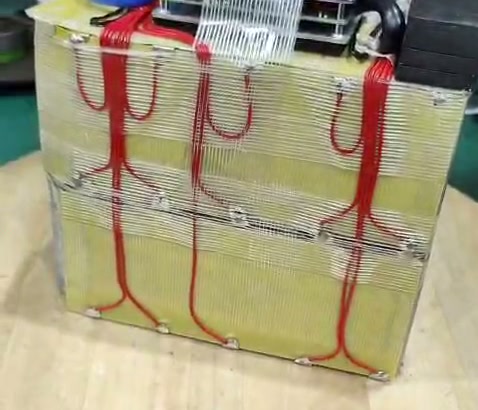
Across a set of source recordings from the same day, a narrator describes the layout: “On one side of the battery, only got five taps. On the other side, fifteen taps.” The current path is described as “up down, up down” through the series groups. And between the two halves: “He only connect using one thin piece of metal only.”
The verdict on camera: “There is absolutely no reason why you should build the battery this way… Maximum effort. Zero brain.” A complicated path isn’t clever. It means more joints to fail and longer runs of thin metal carrying the whole pack’s current.
Balance wires: mee siam, extra loose
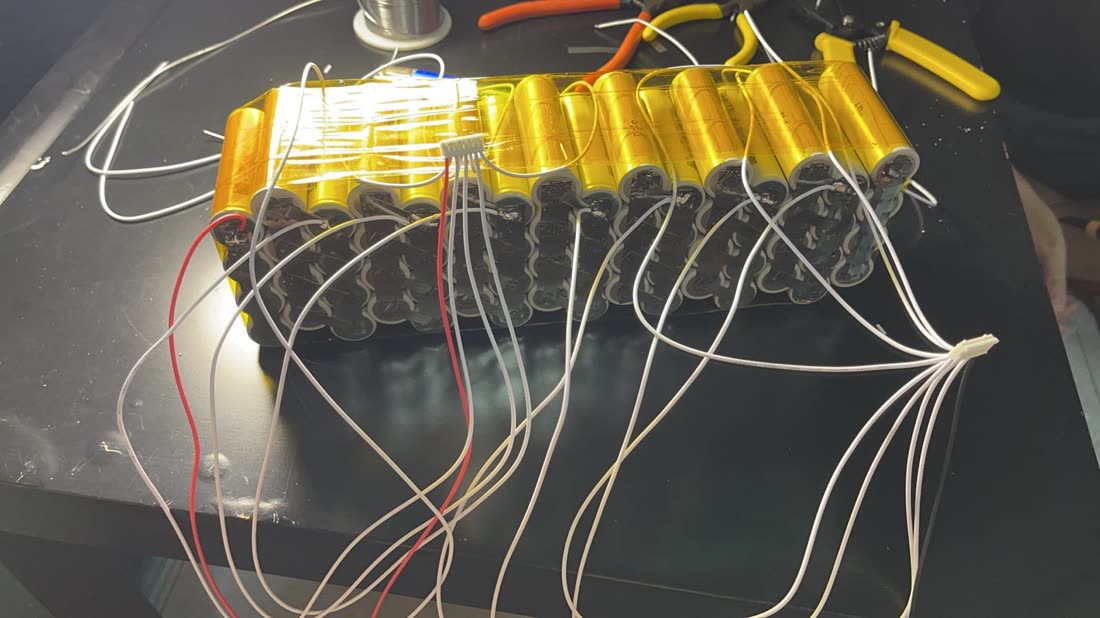
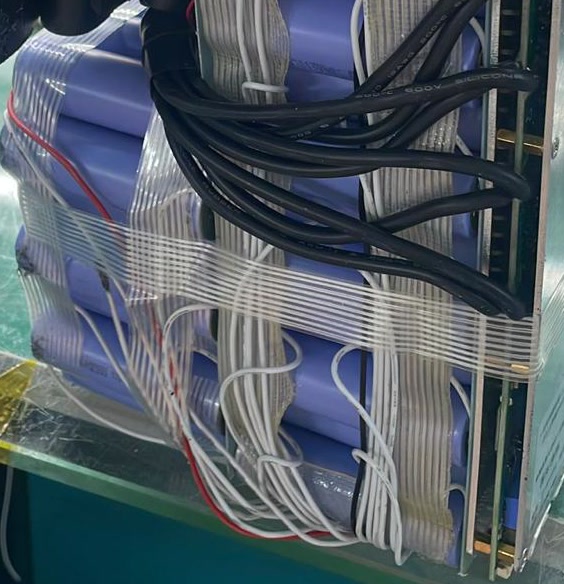
The loose balance wires are doing free-form choreography. The build quality has apparently chosen interpretive dance, sia. The thin white balance leads on these packs are looped, crossed and draped over the cells, with nothing holding them down except tape, and in one case not even that.
The pack on the cover is one example of that loose wiring.
Those wires have been given free roam through the pack. Every one of those thin wires connects to a different voltage. Leave them loose and they rub against cell edges and strips every time the bike moves. Rub long enough and the insulation goes, and that’s a short across part of the pack, inside, where you can’t see it.
No cap, just pure optimism
Steady lah, leave the charging port open and let optimism do the insulation. This workmanship is one zipper away from a very stupid meeting. This pack’s charging connector sits wide open, with no cover and no cap.
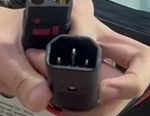
As a narrator puts it in the source recording: “C13, exposed… why don’t have cover, why don’t have cap? This one touch your metal frame. Touch your metal zipper.” An open port is a live connection waiting for the wrong piece of metal. Don’t try to demonstrate a short yourself.
Copper tab: one pull, bye bye
That copper joint got the grip strength of wet tissue, sia. The nickel strip in this pull test is ours. It stayed attached while being pulled with pliers. The copper tab that lifted off belongs to the incoming pack. The recording’s words: “I fail to do it… the metal is still stuck.” Then, on the copper tab: “Your copper tab so easy come out.”
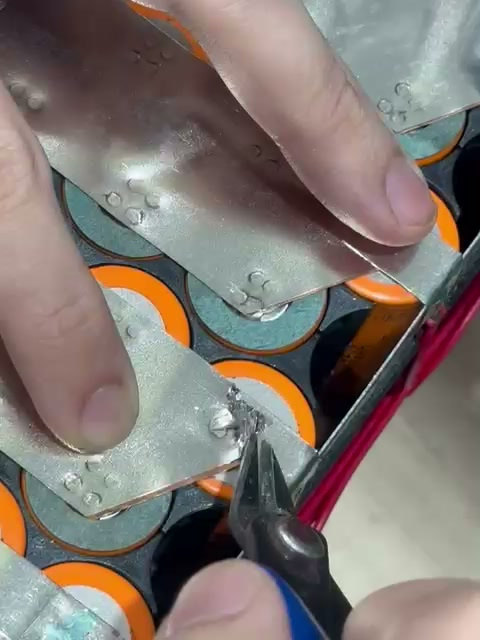
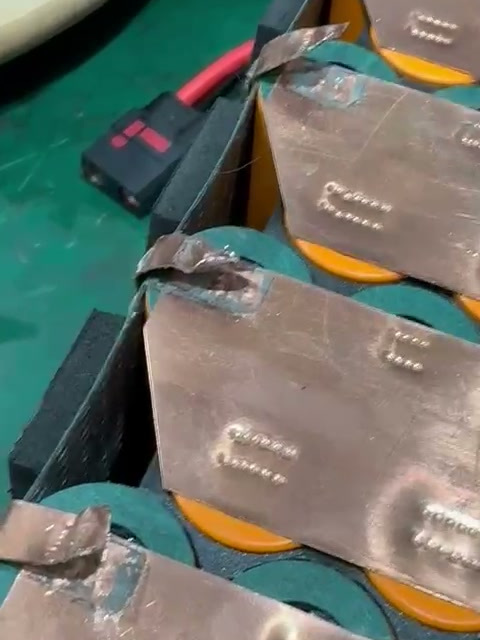
Copper carries current better than nickel, but only if it’s actually joined to the cell. In our view, calling it a copper build means very little when the tab won’t stay attached. This comparison is about the joints shown here; it doesn’t prove that copper joints can never work.
Got a pack like this? Do this
Okay, serious part, no jokes.
If a battery is smoking or on fire: raise the alarm, get out and stay out, and call 995. Don’t stop to film it, unplug it or carry it through the house.
- Look, don’t poke. Any swelling, leaking, heat, strange smell, hissing or cracking: stop using it and stop charging it. Don’t press it, open it or poke it to check.
- Don’t move a damaged pack. Don’t ride with it, courier it or carry it into a shop. Send clear photos first and ask for advice.
- Water: if it’s been soaked or ridden through deep water, treat it as possibly damaged. Stop using and charging it, and have it checked.
- Charging: use the charger specified for that pack, never a damaged or wet one.
- Disposal: not the general rubbish and not the blue recycling bin. Ask how to dispose of it properly.
We can’t promise any pack is safe from photos alone, and we won’t. But send us photos of what you’ve got and we’ll tell you honestly what we see.
The weakest joint sets the standard. Here, the standard has apparently been lowered by unanimous vote, lah.
Sources (6)
- Singapore Consumer Product Safety Office: lithium-ion battery safety
- NFEC: Fire safety for Active Mobility Devices
- UK Department for Transport: battery warning signs
- LTA active mobility rules
- Samsung SDI INR21700-50G Ver. B, 2023 specification (distributor-hosted PDF)
- Samsung SDI INR21700-50G, 2018 tentative specification (distributor-hosted PDF)
Not sure about your pack?
Send us clear photos first. Don’t bring a damaged pack in.